
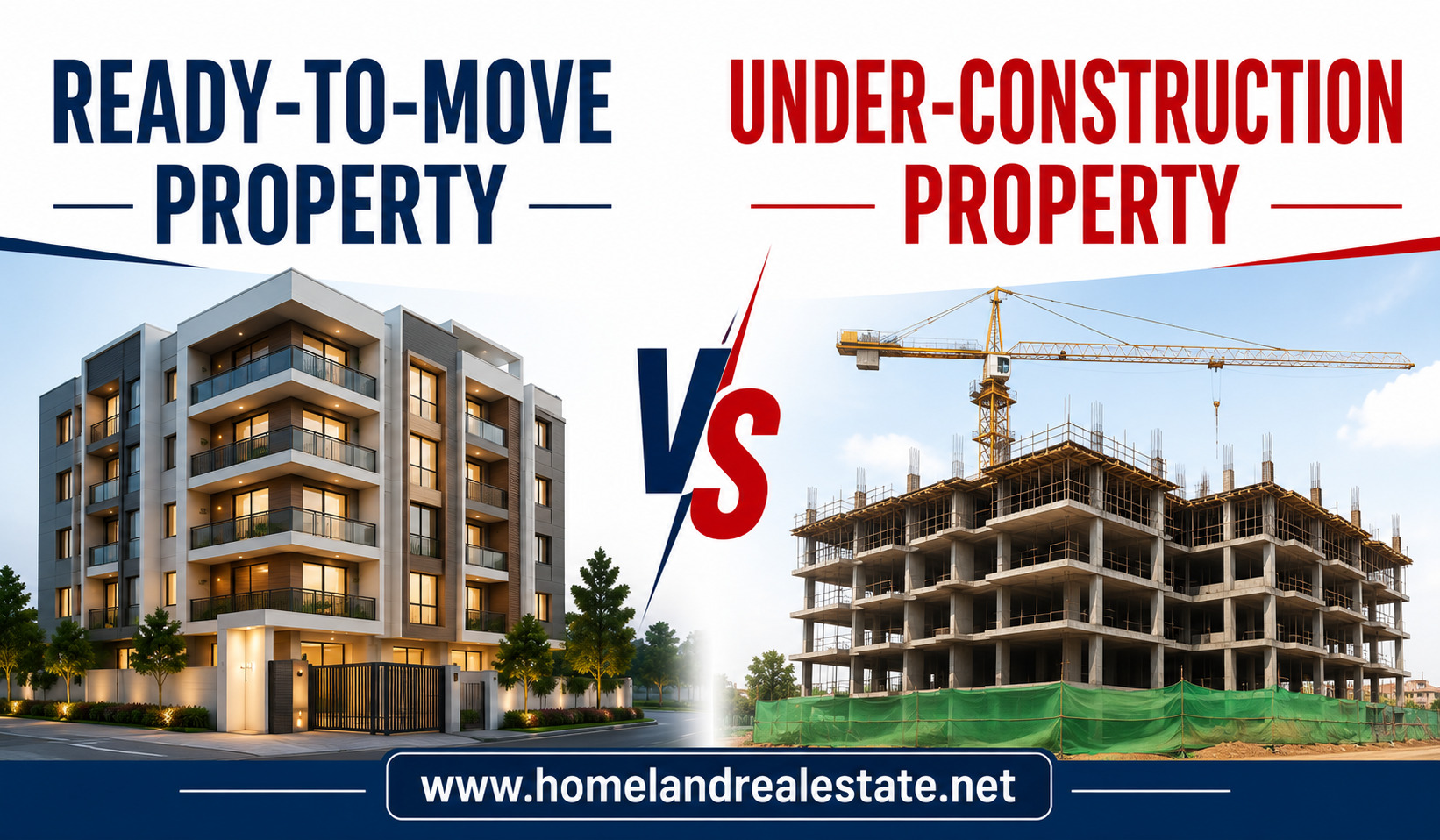
Buying a home is one of the biggest financial decisions many Indian families make. Once you have selected a location and decided on your budget, another important question comes up: should you buy a ready-to-move property or an under-construction property?
Both options have their own advantages and drawbacks. A ready-to-move home can provide greater certainty because you can see the actual property before purchasing, while an under-construction project may offer newer developments, flexible payment schedules, and different pricing opportunities.
The right choice depends on your finances, timeline, risk tolerance, lifestyle, and long-term plans. Understanding the differences can help you make a more informed property-buying decision.
What Is a Ready-to-Move Property?
A ready-to-move property is a completed home that is available for possession after the required formalities have been completed.
You can generally visit the actual apartment, inspect its construction, check the surrounding neighbourhood, and get a better understanding of what you are buying.
For buyers who need a home immediately, this option can be particularly convenient. Instead of waiting for construction to finish, you can plan your move once the transaction and possession process are completed.
However, “ready-to-move” does not mean buyers should skip due diligence. You should still verify the property’s documents, approvals, applicable occupancy-related documentation, outstanding dues, and physical condition.
What Is an Under-Construction Property?
An under-construction property is a home that is still being developed when you purchase it.
In this situation, you may be buying based on a floor plan, specifications, model apartment, brochures, and project information rather than the completed home itself.
Under-construction projects can be attractive to buyers who are willing to wait for possession. Depending on the project and market, developers may provide construction-linked or other payment structures.
However, buyers need to carefully evaluate the developer, project approvals, construction progress, possession commitments, and applicable regulatory information before booking.
Price and Payment Considerations
One of the reasons buyers consider under-construction properties is the possibility of a different entry price or payment structure compared with comparable completed homes.
However, buyers should avoid comparing only the base price.
A property’s total cost can include expenses such as parking, maintenance deposits, preferred-location charges, taxes, registration-related costs, interior work, and other applicable charges.
Ready-to-move homes may have a higher upfront financial requirement in some markets, but you can inspect the finished product before committing.
The best approach is to calculate the complete cost of both options and compare them based on your actual budget.
Possession Timeline
Possession is one of the biggest differences between the two choices.
With a ready-to-move property, the home already exists, so the waiting period can be considerably shorter once the transaction formalities are completed.
An under-construction property requires patience. The actual possession date depends on construction progress and the terms of the agreement.
Construction delays can create financial pressure, particularly if you are currently renting a home. You may have to continue paying rent while also dealing with home-loan obligations according to the loan structure.
Before purchasing an under-construction property, examine the developer’s previous delivery record and carefully read the possession terms in the agreement.
Ability to Inspect the Actual Home
A major advantage of buying ready-to-move is that you can see what you are purchasing.
You can inspect the apartment’s size, layout, ventilation, natural light, flooring, doors, windows, plumbing, electrical fittings, views, and construction quality.
You can also explore the building’s common areas and surrounding roads.
With an under-construction property, the final result may differ from what you imagined based on marketing material or a sample apartment. Therefore, it is particularly important to understand the specifications and contractual commitments.
Construction Quality
A completed property gives you an opportunity to identify visible construction or finishing problems before taking possession.
Look for issues such as dampness, cracks, uneven flooring, poor plumbing, defective fittings, inadequate drainage, and problems with doors or windows.
With an under-construction project, construction quality depends on how the developer executes the project over time.
Research the developer’s completed projects and, where possible, visit them. Existing residents can provide useful insights into construction quality, maintenance, water supply, lift operation, and other practical issues.
Location and Neighbourhood Development
Ready-to-move and under-construction properties can differ significantly in terms of location.
Many new projects are developed in expanding areas where infrastructure is still developing. These locations may benefit from future roads, metro connectivity, business hubs, schools, and commercial centres.
However, future development should never be treated as guaranteed appreciation.
A ready-to-move property in an established neighbourhood may offer immediate access to schools, hospitals, markets, public transportation, and employment areas.
When comparing locations, consider both your current lifestyle and how the area could evolve over the next several years.
Home Loan and Financial Planning
Home loans work differently depending on the type and stage of the property.
For under-construction projects, loan disbursement may occur in stages based on construction progress, depending on the lender and loan arrangement. This can affect the timing of your financial obligations.
For a ready-to-move property, the loan process is generally connected to the completed property’s documentation, valuation, and other lender requirements.
Regardless of the property type, don’t select a loan simply because the EMI appears affordable. Consider the interest rate, tenure, processing charges, prepayment conditions, and your existing financial commitments.
Taxes and Transaction Costs
The tax treatment and transaction costs can differ depending on the type of property and applicable rules.
For example, applicable indirect tax treatment may depend on whether a property is still under construction or qualifies as a completed property under the relevant regulations.
Stamp duty and registration charges also vary by state and transaction.
Because property taxation and regulations can change, buyers should verify the current rules applicable to their state and property before making a purchase. A qualified tax professional or property lawyer can provide advice based on your specific transaction.
Amenities and Community
Under-construction projects often advertise extensive amenities such as clubhouses, gyms, swimming pools, landscaped gardens, sports facilities, children’s play areas, and community spaces.
These facilities can be attractive, but buyers should determine exactly what is included in the agreement and when the facilities are expected to be completed.
A ready-to-move project allows you to see whether the advertised amenities actually exist and how well they are maintained.
Remember that extensive amenities can also mean higher maintenance expenses. Consider whether the facilities are worth the additional long-term cost.
Risk of Delays
Construction delays are among the biggest concerns associated with under-construction properties.
Delays can happen because of regulatory matters, financing issues, construction problems, supply disruptions, disputes, or other circumstances.
Before booking, investigate the project’s construction progress and the developer’s history of completing previous projects.
Review the formal agreement carefully, including provisions related to possession and delays. Do not depend solely on verbal assurances from sales representatives.
Ready-to-move properties generally reduce construction-related waiting risk because the building has already been completed, although buyers still need to verify possession and legal documentation.
Resale and Rental Potential
Both property types can have good resale or rental potential, but location and demand are usually more important than whether the property is new or completed.
A ready home in an established area may attract tenants immediately, particularly if it is close to employment centres, schools, transport, and other facilities.
An under-construction property in a developing location could benefit from future infrastructure and growing demand, but future appreciation is never guaranteed.
If investment potential is important to you, examine actual rental demand, comparable property prices, infrastructure, employment growth, and local housing demand instead of relying on projected returns.
Maintenance and Initial Expenses
A new ready-to-move apartment may require additional spending on furniture, wardrobes, appliances, curtains, lighting, and other interiors.
An under-construction property gives you more time to plan these expenses, but you may also have to manage rent or other housing costs while waiting for possession.
For either option, estimate your post-purchase expenses carefully. Your budget should account for EMI, maintenance, utilities, insurance, property taxes where applicable, repairs, and household expenses.
Which One Should You Choose?
A ready-to-move property may be better if:
- You need a home within a short period.
- You want to inspect the actual apartment before buying.
- You prefer greater certainty about the building and neighbourhood.
- You want to avoid construction-related waiting.
- You are comfortable with the property’s current location and price.
An under-construction property may suit you if:
- You can wait for possession.
- You prefer a new development.
- You are comfortable evaluating construction and delivery risks.
- The project has strong documentation and a credible developer.
- The payment structure fits your financial plans.
Neither option is automatically better. Your personal circumstances should determine the choice.
Questions to Ask Before Booking
Before paying a booking amount, ask:
- What is the complete purchase cost?
- What is the expected possession timeline?
- What does the agreement say about delays?
- Is the project registered with the applicable real estate regulator where required?
- Which approvals and documents have been obtained?
- What amenities are actually included?
- What will the maintenance charges be?
- What is the property’s carpet area?
- What are the applicable taxes and registration costs?
- Have the builder and project been independently researched?
Getting clear answers before signing can prevent misunderstandings later.
Final Thoughts
The decision between a ready-to-move and an under-construction property ultimately comes down to your priorities.
Ready-to-move homes offer greater visibility and convenience because the property can be inspected before purchase. Under-construction projects can provide access to newer developments and different payment structures, but buyers must be more careful about construction progress, possession timelines, documentation, and developer reliability.
Whichever option you choose, don’t rush because of limited-period offers or sales pressure. Compare the complete cost, investigate the location, verify documents, understand the agreement, and assess whether the property fits your long-term financial plans.
A well-researched property purchase is more important than simply choosing between a completed and an under-construction home.