
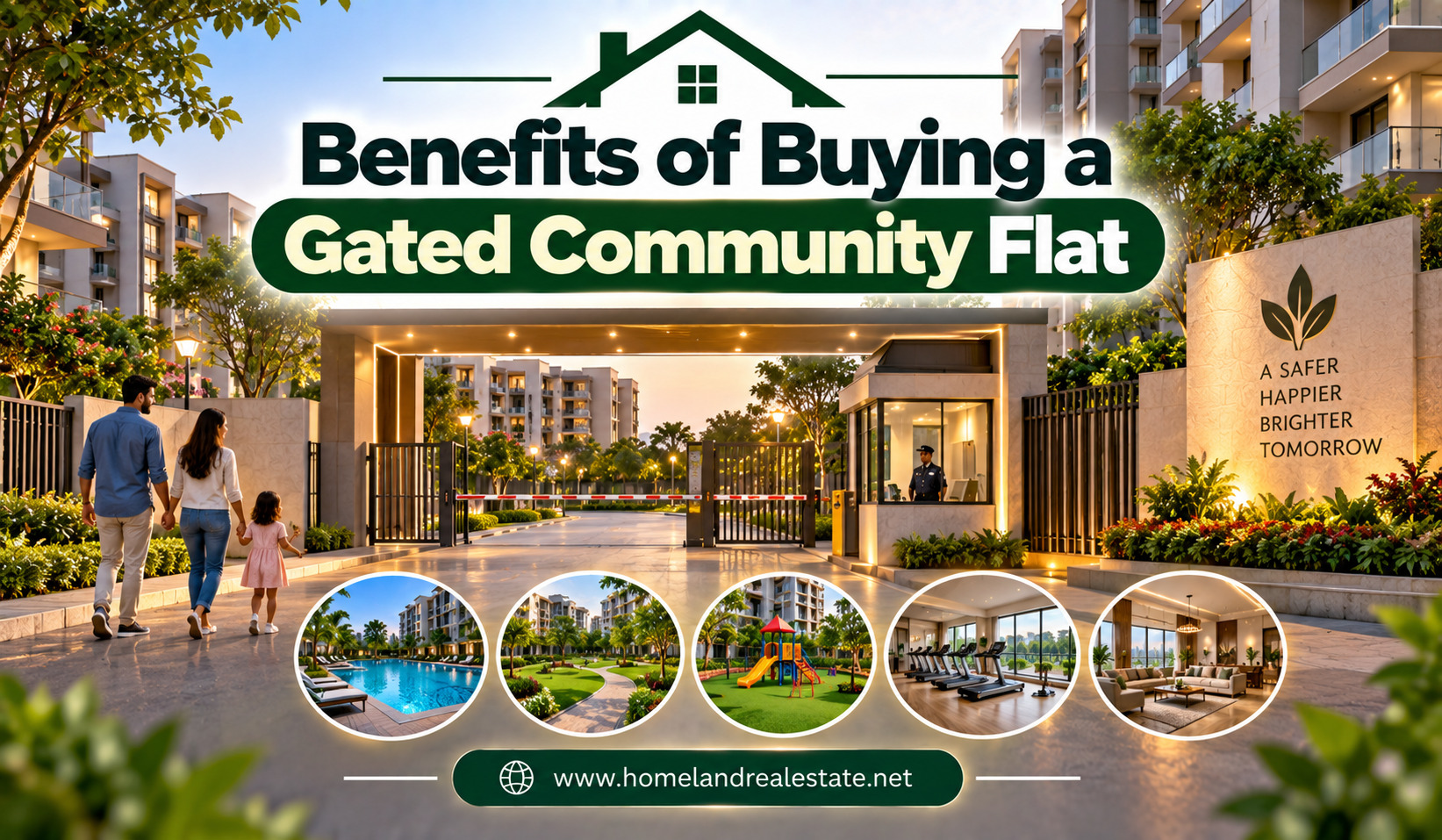
Buying a home is one of the biggest financial decisions most people make, and the type of residential development you choose can have a major impact on your everyday lifestyle. Among the many options available today, gated community flats have become increasingly popular among families, working professionals, retirees, and property investors.
A gated community is a residential development with controlled access, shared amenities, internal roads, security arrangements, and common facilities. These projects can range from mid-range apartment complexes to large premium townships with extensive recreational and lifestyle facilities.
The popularity of gated communities has grown alongside changing homebuyer preferences. Buyers increasingly look beyond the apartment itself and consider security, convenience, recreation, maintenance, and the overall quality of the residential environment.
If you are considering purchasing an apartment, understanding the benefits of buying a gated community flat can help you decide whether this type of property matches your needs.
1. Better Security and Controlled Access
One of the biggest advantages of a gated community is controlled entry and exit.
Most gated developments have security personnel, entry gates, visitor management systems, CCTV cameras, intercom facilities, or digital access systems. Depending on the project, residents may also receive alerts when visitors or deliveries arrive.
This additional layer of security can provide peace of mind, particularly for families with children and older adults.
However, security standards vary between projects. Buyers should check the actual security arrangements instead of assuming that every gated community offers the same level of protection.
2. Access to Multiple Amenities
Modern gated communities often provide several amenities within the development itself.
Depending on the project, residents may have access to swimming pools, gyms, clubhouses, children’s play areas, landscaped gardens, walking tracks, sports courts, community halls, lounges, and recreational spaces.
Having these facilities close to home can make daily life more convenient. Instead of travelling across the city for every recreational activity, residents can use facilities within their residential complex.
For families, amenities can also provide spaces where children and adults can spend time outdoors and interact with neighbours.
3. A More Organised Residential Environment
Gated communities are generally planned as integrated residential developments. Internal roads, parking areas, landscaped spaces, buildings, recreational facilities, and common areas are usually designed as part of the same project.
This can create a more organised living environment compared with standalone apartment buildings surrounded by mixed-use development.
Planned communities may also provide designated areas for waste management, visitor parking, deliveries, maintenance, and recreation.
The quality of this experience depends heavily on how well the residents’ association and property management team maintain the development.
4. Community Living
Another important benefit is the opportunity to build a stronger residential community.
Because many families live within the same development and share common facilities, residents may have more opportunities to interact with one another.
Festivals, sports activities, children’s events, workshops, cultural programmes, and community gatherings are often organised within larger gated projects.
For families who enjoy social interaction, this can make the neighbourhood feel more connected.
At the same time, buyers who prefer complete privacy should consider the size and culture of the community before purchasing. A large residential development can be socially active, but it may also have more residents and shared spaces.
5. Safer Spaces for Children
Gated communities can be particularly attractive to families with young children.
Many projects provide dedicated children’s play areas, landscaped open spaces, walking paths, and internal roads with controlled vehicle movement.
These facilities can give children more opportunities to play close to home while parents remain within the residential complex.
However, parents should still evaluate actual traffic movement, open-space maintenance, fencing, security, and the location of play areas before buying.
6. Convenient Lifestyle
One of the major reasons people choose gated communities is convenience.
A well-developed project may include facilities such as convenience stores, pharmacies, salons, cafes, co-working areas, gyms, sports facilities, and other services.
Some large townships can provide many everyday facilities within or immediately around the development.
This can reduce the need to travel for routine activities. For working professionals, this convenience can be particularly valuable because time spent travelling across the city can be significant.
7. Better Maintenance of Common Areas
In a professionally managed gated community, common areas are generally maintained through regular maintenance services.
These may include cleaning, landscaping, lift maintenance, security, waste collection, lighting, plumbing support, and upkeep of shared facilities.
This can be easier than coordinating maintenance independently in a small apartment building.
However, professional maintenance comes with a cost. Monthly maintenance charges can be significant in projects with extensive amenities, so buyers should understand the fee structure before purchasing.
8. Parking Facilities
Parking is a major concern in many Indian cities, particularly in densely populated urban areas.
Gated communities usually have designated parking spaces, although the exact arrangement varies between projects.
Some developments provide covered parking, visitor parking, basement parking, or multiple parking spaces for larger apartments.
Before purchasing, confirm whether parking is included in the property transaction, separately charged, allotted by the society, or subject to specific rules.
Don’t rely solely on verbal assurances from a salesperson.
9. More Open and Green Spaces
Large gated communities often allocate space for landscaping, gardens, parks, walking paths, and recreational areas.
This can be a significant advantage for buyers living in crowded cities where open public spaces may be limited.
Green areas can improve the visual appeal of the development and provide residents with places to walk, exercise, relax, or spend time with family.
However, the amount of usable open space matters more than marketing claims. Buyers should visit the property and examine how much space is actually accessible to residents.
10. Better Privacy Than Many Standalone Buildings
Controlled access and planned layouts can provide greater privacy than some standalone apartment buildings.
Large gated projects may have separate entry systems for residents, visitors, service personnel, and deliveries. Some premium developments also have limited-access towers or private elevators.
The degree of privacy depends on project density. A very large development with thousands of residents may feel less private than a smaller premium community.
Therefore, buyers should consider the number of apartments per tower, total project population, elevator capacity, parking arrangements, and common-area usage.
11. Potential Resale Appeal
Gated community flats can have strong resale demand when the project is well maintained and located in a desirable neighbourhood.
Buyers often appreciate established communities with functioning amenities, good security, reliable maintenance, and active resident associations.
A project with a strong reputation can potentially attract both end-users and investors in the resale market.
However, resale value ultimately depends on several factors, including location, property condition, project age, developer reputation, competing supply, maintenance standards, and local demand.
A gated community label by itself does not guarantee appreciation.
12. Potential Rental Demand
Gated communities can also be attractive to tenants, especially families and professionals who value security, amenities, parking, and organised living.
Properties located near technology parks, business districts, educational institutions, hospitals, and transportation networks may benefit from stronger rental demand.
For investors, it is important to calculate the expected rental yield rather than assuming that amenities automatically produce high rental returns.
Compare the annual rent with the total purchase price, maintenance expenses, taxes, vacancy periods, and other ownership costs.
13. Emergency and Support Services
Larger residential communities may have systems for dealing with common emergencies and maintenance issues.
Security teams can coordinate access for ambulances, fire services, or other emergency personnel. Some communities also have dedicated maintenance teams available for plumbing, electrical, or other urgent problems.
This does not replace professional emergency services, but having trained staff and established procedures can make certain situations easier to manage.
Buyers should ask the management team about fire safety systems, emergency exits, evacuation plans, backup power, and other safety arrangements before purchasing.
14. Better Long-Term Living Experience
Perhaps the biggest benefit of a good gated community is that the purchase provides more than an apartment.
You are also buying access to a residential environment with shared infrastructure, amenities, security, maintenance, and community facilities.
For families planning to stay in the same property for many years, these benefits can have considerable value.
However, the quality of the experience depends on the project. A poorly managed gated community can have high maintenance costs, overcrowded amenities, parking problems, or inadequate upkeep.
Things to Check Before Buying a Gated Community Flat
While gated communities offer several advantages, buyers should not make a purchase based only on brochures and amenities.
First, evaluate the location and connectivity. Check the actual travel time to your workplace, schools, hospitals, public transport, and essential services.
Next, examine the project’s legal and construction documents. Verify RERA registration where applicable, approvals, title information, possession status, and the developer’s track record.
You should also understand the maintenance structure. Ask how much you will pay monthly, what services are included, whether maintenance charges can increase, and whether major repair expenses are charged separately.
Visit the property at different times of the day to understand traffic, noise, parking availability, water supply, and general activity levels.
Finally, speak with existing residents if possible. Their experience can provide useful information about security, maintenance, water, power backup, management, and actual amenity usage.
Are Gated Community Flats Worth Buying?
For many homebuyers, the answer can be yes, particularly when security, amenities, convenience, and community living are priorities.
Families with children may appreciate the recreational spaces and controlled environment. Working professionals may value the convenience of on-site facilities. Older residents may benefit from security, walking areas, elevators, and maintenance services.
However, gated communities are not automatically better than every standalone apartment. They can involve higher maintenance charges, crowded common facilities, association rules, and additional costs.
The right choice depends on your lifestyle and budget.
Final Thoughts
The benefits of buying a gated community flat extend beyond the apartment itself. Controlled access, security, amenities, maintenance services, parking, green spaces, community living, and recreational facilities can make everyday life more convenient and comfortable.
For families, a well-managed gated community can provide a practical environment with spaces for children and social interaction. For professionals and investors, amenities and location can also contribute to rental demand and long-term appeal.
But buyers should look beyond attractive brochures and impressive amenity lists. The most important factors remain location, construction quality, legal clarity, developer reputation, maintenance standards, connectivity, and overall affordability.
Before purchasing, visit the project personally, understand the complete cost of ownership, check the documents carefully, and speak with existing residents.
A gated community can be a great place to live—but the quality of the project and its management ultimately determine whether the additional cost delivers real value.