
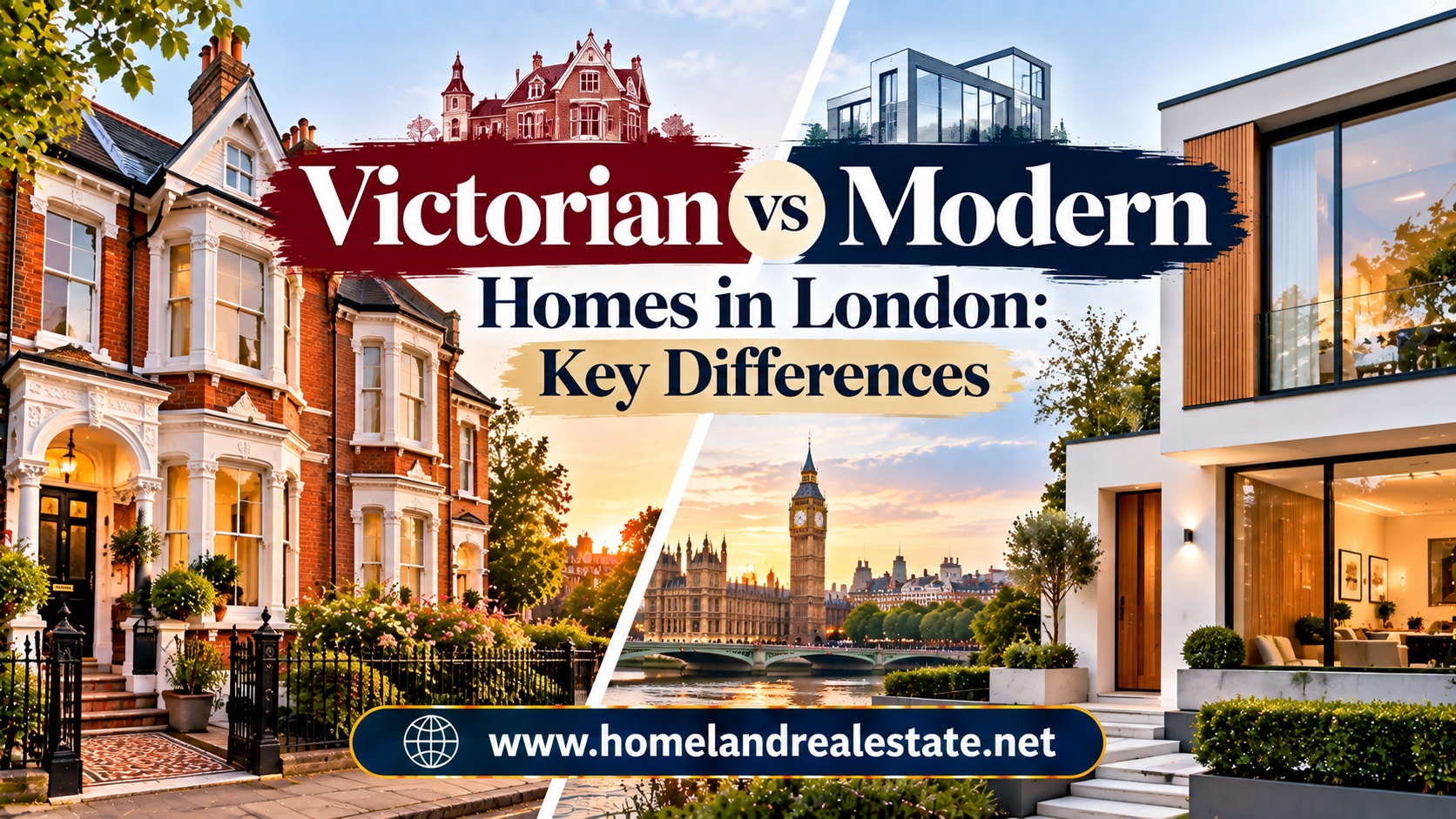
London offers an unusually broad selection of residential properties. From character-filled Victorian terraces to contemporary apartments and newly built houses, buyers can choose homes that differ significantly in architecture, layout, construction, maintenance, and lifestyle.
The choice between Victorian vs Modern Homes in London is therefore about more than appearance. A Victorian property may offer period details, established neighbourhoods, and distinctive layouts, while a modern home may provide contemporary interiors, updated building systems, and designs suited to current lifestyles.
For homebuyers, the decision often comes down to priorities. Some buyers value original fireplaces, high ceilings, bay windows, and traditional architecture. Others prefer open-plan living, energy-efficient features, modern kitchens, and lower immediate renovation requirements.
Property investors also need to consider factors such as tenant preferences, maintenance, refurbishment, running costs, and the condition of the building.
Understanding the main differences between Victorian vs Modern Homes in London can help you decide which type of property better matches your budget, lifestyle, and long-term plans.
What Is a Victorian Home?
Victorian homes were generally constructed during the Victorian era and are particularly common across many established London neighbourhoods.
Terraced houses are among the most recognisable examples. Depending on the property and location, Victorian homes may feature brick exteriors, sash windows, decorative details, fireplaces, high ceilings, and separate rooms.
However, no two Victorian properties are necessarily identical. Many have been extended, renovated, converted, or modernised over the years.
Common Victorian Features
Period features can include:
- High ceilings
- Sash windows
- Bay windows
- Decorative fireplaces
- Original cornices or mouldings
- Brick façades
- Separate reception rooms
- Traditional staircases
- Long or narrow floor plans
These features can give a property a distinctive sense of character.
What Is a Modern London Home?
Modern homes generally refer to newer properties designed and constructed using contemporary approaches to architecture, building systems, layouts, and materials.
They can include newly built houses, contemporary apartment developments, converted buildings with modern interiors, and recently constructed residential communities.
Common Modern Features
Depending on the development, modern properties may include:
- Open-plan living areas
- Contemporary kitchens
- Modern bathrooms
- Integrated storage
- Double-glazed windows
- Modern heating systems
- Balconies or terraces
- Lift access in apartment buildings
- Communal facilities in some developments
The exact specifications vary, so buyers should assess each property individually rather than assuming all modern homes have the same features.
Victorian vs Modern Homes in London: Key Differences
The differences between these two property categories can affect how a home looks, feels, functions, and costs to maintain.
| Feature | Victorian Homes | Modern Homes |
| Architecture | Traditional and period-oriented | Contemporary design |
| Layout | Often separate rooms | Often more open-plan |
| Character | Strong period features may remain | Usually focuses on modern finishes |
| Windows | Traditional features may be present | Modern glazing is common |
| Maintenance | May require specialist or ongoing upkeep | Newer systems may require less immediate work |
| Energy considerations | Depends heavily on upgrades | Often designed with modern standards in mind |
| Storage | Can vary considerably | Often designed around modern storage needs |
| Outdoor space | Gardens or yards may be available | Balconies, terraces, gardens, or communal areas may vary |
| Renovation | May offer opportunities for improvement | Usually requires less immediate renovation when newly built |
This comparison is a general guide. The actual condition and specification of an individual property are more important than its broad category.
Architectural Character and Design
The Appeal of Victorian Architecture
For many buyers, the character of a Victorian home is one of its biggest attractions.
Original fireplaces, decorative mouldings, traditional windows, exposed brick, and other architectural details can create a distinctive atmosphere.
Established terraces can also provide a strong connection to the architectural identity of a neighbourhood.
However, period character should not be confused with property condition. A beautiful exterior does not necessarily mean that the plumbing, electrics, roof, insulation, heating, or other building elements are in good condition.
The Appeal of Modern Design
Modern homes generally focus on functionality and contemporary lifestyles.
Open-plan kitchens and living areas can make entertaining easier, while modern storage solutions may help homeowners use available space efficiently.
Contemporary apartments may also offer features such as lifts, secure entrances, communal areas, balconies, or other facilities, depending on the development.
For buyers who prefer minimal interiors and modern finishes, these features can be particularly appealing.
Layout and Use of Space
One of the clearest differences when considering Victorian vs Modern Homes in London is the way internal space is arranged.
Victorian Layouts
Victorian houses often have distinct rooms connected by hallways.
Separate reception rooms can provide privacy and flexibility, but the layout may not suit buyers who prefer a large open-plan living area.
Some properties have also been extended or reconfigured, meaning the original layout may have changed significantly.
Modern Layouts
Modern homes are often designed around contemporary lifestyles.
Kitchens may connect directly to dining and living spaces. Bedrooms may include built-in storage, while open areas can accommodate flexible furniture arrangements.
However, open-plan living is not ideal for everyone. Some buyers may prefer separate spaces for working, relaxing, cooking, and entertaining.
Maintenance and Renovation
Maintenance is an important consideration for both property types.
Victorian Property Maintenance
Older homes can require careful inspection.
Potential areas to examine include roofing, windows, damp, insulation, heating systems, plumbing, electrical installations, and structural elements.
The presence of original features can also mean that some repairs or replacements require specialist attention.
A professional survey can help identify issues that may not be obvious during a standard viewing.
Modern Property Maintenance
Newer properties may require less immediate refurbishment, particularly when they have been recently constructed.
However, modern homes are not maintenance-free.
Buyers should understand building management arrangements, warranties where applicable, service charges for flats, communal maintenance, and the condition of shared facilities.
Energy Efficiency and Running Costs
Energy performance can be an important consideration when comparing Victorian vs Modern Homes in London.
Older properties were constructed under different building practices and may require improvements to insulation, windows, heating, or other components.
Some Victorian homes have already been upgraded, while others may need further work.
Modern properties are generally designed with contemporary building requirements and systems, but their actual performance depends on construction quality, materials, heating systems, and how the property is used.
Buyers should examine the specific property’s available energy information and running costs rather than making assumptions based solely on age.
Home Improvement Opportunities
Renovating a Victorian Home
Victorian properties can offer interesting renovation opportunities.
A homeowner may choose to restore period features while updating kitchens, bathrooms, insulation, lighting, heating, or storage.
However, renovation can involve significant planning, costs, and practical challenges.
Before purchasing a property that needs substantial work, establish a realistic improvement budget and obtain appropriate professional advice.
Improving a Modern Home
Modern homes may require less structural renovation but can still benefit from personalisation.
Homeowners might update flooring, lighting, storage, décor, kitchens, bathrooms, or outdoor areas.
Because the underlying design is often more recent, improvements may focus more on personal style and functionality than extensive restoration.
Victorian vs Modern Homes for Families
Families should think carefully about how the property will work over time.
A Victorian house may offer multiple rooms, stairs, gardens, and traditional layouts that provide separation between living spaces.
A modern property may offer efficient layouts, contemporary kitchens, storage, and potentially easier maintenance.
The right option depends on the family’s requirements.
Consider bedroom numbers, school access, outdoor space, storage, commuting, parking, stairs, and the ability to adapt the home as household needs change.
Victorian vs Modern Homes for First-Time Buyers
First-time buyers often need to balance character with affordability and practical ownership costs.
A Victorian property may look attractive because of its architectural features, but buyers should understand the potential cost of maintenance and refurbishment.
A modern apartment may offer contemporary facilities and fewer immediate renovation requirements, but buyers should examine service charges, lease arrangements, building management, and other ongoing costs.
The best choice depends on the complete financial picture rather than the initial purchase price alone.
Investment Considerations
Both Victorian and modern properties can be considered by investors, but they have different characteristics.
Victorian Property Investment
Period homes may appeal to tenants who value character, established neighbourhoods, and traditional architecture.
However, investors should carefully assess maintenance requirements, refurbishment costs, building condition, and the property’s suitability for the intended tenant market.
Modern Property Investment
Modern homes can appeal to tenants who prioritise contemporary layouts, newer facilities, energy considerations, and convenience.
Investors should nevertheless assess service charges, management arrangements, maintenance, financing, and local rental demand.
Neither property type should be considered automatically superior for investment purposes.
Location Still Matters
When comparing Victorian vs Modern Homes in London, it is easy to focus too heavily on the building itself.
Location remains an important part of any property decision.
Check transport connections, shops, schools, parks, healthcare, restaurants, employment centres, and other amenities relevant to your lifestyle or target tenants.
A well-maintained home in the right location may be more suitable for you than a property with impressive features in a less convenient area.
How to Choose Between Victorian and Modern Homes
Define Your Priorities
Start by deciding what matters most.
Do you want period character or contemporary design? Do you need an open-plan kitchen? Is a garden important? Would you prefer a low-maintenance property?
Clear priorities make property searches more efficient.
Calculate the Total Cost
Do not focus only on the asking price.
Consider mortgage costs, transaction expenses, maintenance, insurance, service charges where applicable, renovation requirements, and regular household expenses.
Inspect the Property
A viewing should go beyond appearance.
Check windows, walls, ceilings, floors, heating, plumbing, storage, natural light, and other relevant areas.
For older homes, a professional survey can be particularly useful.
Think Long Term
Consider how the property will work several years from now.
Your employment, family circumstances, working arrangements, and space requirements may change.
A property should ideally support your realistic future needs rather than only your current preferences.
Frequently Asked Questions
1. Are Victorian homes better than modern homes?
Neither property type is universally better because the right choice depends on the buyer’s preferences, budget, property condition, lifestyle, and long-term requirements.
2. Do Victorian homes require more maintenance?
Some Victorian homes may require more maintenance or refurbishment because of their age, but the actual requirements depend on the property’s condition and previous improvements.
3. Are modern homes more energy efficient?
Modern homes are generally built using contemporary construction practices, but energy performance varies between individual properties and should be assessed using the property’s specific information.
4. Which property type is better for investment?
Both Victorian and modern homes can be investment options, but investors should evaluate local rental demand, property condition, ownership costs, financing, tenant preferences, and long-term objectives.
5. What should I check before buying a Victorian home?
You should examine the property’s structural condition, roof, windows, damp, insulation, heating, plumbing, electrical systems, alterations, and potential maintenance requirements, with appropriate professional inspections where necessary.