
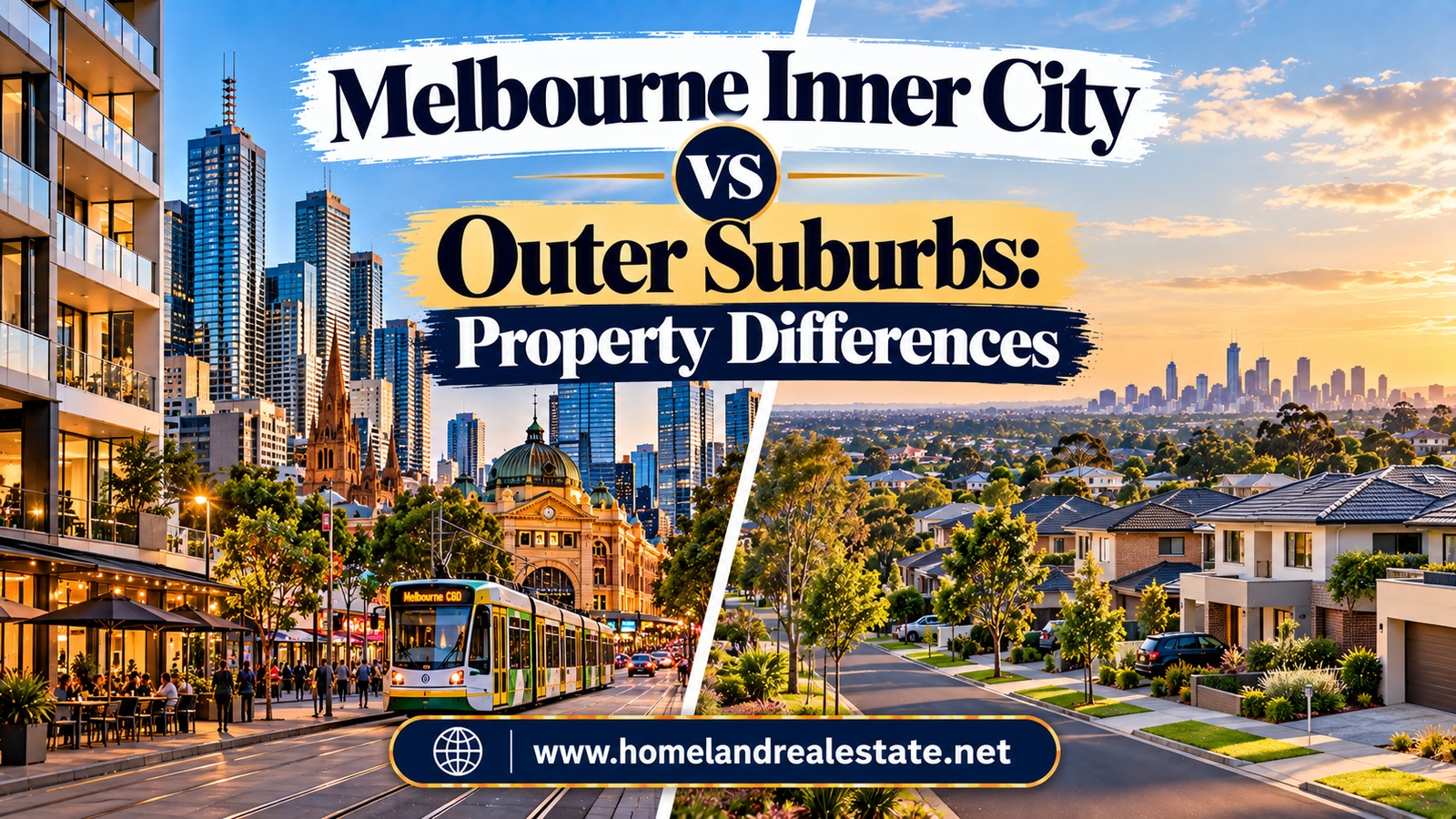
Choosing a property in Melbourne involves more than deciding how many bedrooms you need. The location of your home can influence its size, design, transport options, outdoor space, maintenance responsibilities, lifestyle, and long-term suitability. For many buyers, one of the biggest decisions is whether to focus on the inner city or look toward Melbourne’s outer suburbs.
Understanding Melbourne Inner City vs Outer Suburbs: Property Differences can help homebuyers and investors compare their options more effectively. Inner-city properties often appeal to buyers who prioritise convenience, public transport, employment access, dining, entertainment, and established neighbourhoods. Outer suburbs may attract buyers looking for larger homes, more outdoor space, parking, and a different pace of residential life.
Neither option is automatically better. The right choice depends on your budget, household size, work location, lifestyle preferences, and future plans. By comparing the practical differences between these locations, buyers can make a more informed property decision.
Understanding Melbourne’s Inner-City Property Market
Melbourne’s inner-city areas generally provide close access to the central business district and established urban amenities. Residential properties can include apartments, terraces, townhouses, renovated period homes, and other higher-density housing.
Apartments and Compact Homes
Apartments are common in many inner-city locations and can suit buyers who prioritise convenience over large amounts of private space.
A well-located apartment may place residents close to public transport, restaurants, shops, workplaces, parks, and cultural attractions. This can be particularly useful for professionals and buyers who spend considerable time outside their homes.
However, buyers should look beyond the apartment itself. Building condition, owners corporation arrangements, ongoing fees, parking, storage, and shared facilities all deserve careful attention.
Character Homes and Townhouses
Some inner-city neighbourhoods also contain older houses, terraces, and townhouses with distinctive architectural features.
These properties may offer more privacy and outdoor space than a typical apartment, but they can also require more maintenance.
Before buying an older home, assess the condition of the roof, exterior, plumbing, electrical systems, windows, structure, and other major components.
Understanding Melbourne’s Outer Suburbs
Outer suburban areas generally provide a different residential environment. Buyers may find more detached houses, larger blocks, townhouses, newer developments, and family-oriented housing options.
More Space for Families
One of the major attractions of outer suburban property is the potential for additional living space.
A larger house may provide several bedrooms, a home office, a garage, storage, a backyard, and flexible areas for children or hobbies.
For growing families, these features can be important when planning for long-term homeownership.
Different Types of Residential Development
Outer suburbs can include established homes alongside newer residential developments.
Buyers should examine the quality and condition of individual properties rather than assuming that newer construction is automatically better.
For new or recently constructed homes, consider the layout, materials, finishes, energy efficiency, storage, landscaping, and potential future maintenance.
Melbourne Inner City vs Outer Suburbs: Property Differences
The differences between these locations become clearer when comparing common property characteristics.
| Factor | Inner City | Outer Suburbs |
| Common property types | Apartments, terraces, townhouses | Detached homes, townhouses, newer developments |
| Living space | Often more compact | Often more opportunity for larger floor plans |
| Outdoor space | May be limited or shared | Private gardens are more common |
| Parking | Can be limited depending on property | Often more available with houses |
| Transport | Often strong public transport access | Varies by suburb and location |
| Amenities | Usually close to established urban services | Often centred around local shopping and community facilities |
| Maintenance | Apartments may have shared maintenance | Larger homes may require more individual upkeep |
| Lifestyle | Urban and amenity-focused | More residential and space-oriented |
This comparison provides a general guide. Individual properties and neighbourhoods can vary significantly.
Location and Commuting Considerations
Location can have a major effect on everyday convenience.
For buyers comparing Melbourne Inner City vs Outer Suburbs: Property Differences, commuting should be one of the first factors to evaluate.
Inner-City Commuting
Living closer to the city can be attractive for people who work in or regularly visit central Melbourne.
Shorter travel distances may provide more time for family, exercise, social activities, or personal interests.
However, buyers should still consider traffic, parking, public transport access, noise, and the exact location of the property.
Outer-Suburban Commuting
Outer suburban homes may provide more space but can require longer journeys depending on where you work.
Before purchasing, test the commute during normal travel periods. A location that seems convenient during an off-peak visit may feel very different during busy periods.
For households with two working adults, consider both commuting patterns rather than focusing on one person’s journey.
Property Size and Outdoor Space
Space is one of the most visible differences between many inner-city and outer-suburban properties.
Inner-City Space
An apartment may make efficient use of a smaller floor area.
For buyers who prefer a low-maintenance lifestyle, this can be an advantage. A balcony, shared garden, nearby park, or local recreation area may provide alternatives to a private backyard.
However, buyers should consider whether the available storage and living space will remain sufficient over time.
Outer-Suburban Space
Detached homes in outer areas can provide larger living areas and private outdoor space.
This can benefit families with children, pets, hobbies, or a preference for outdoor entertaining.
The trade-off is that larger properties often require more maintenance, including landscaping, repairs, cleaning, and upkeep of exterior areas.
Lifestyle and Local Amenities
The lifestyle offered by a property should match how you actually spend your time.
Inner-City Lifestyle
Inner-city buyers may prioritise access to:
- Restaurants and cafes
- Shopping
- Public transport
- Cultural attractions
- Entertainment
- Employment centres
- Parks and recreational facilities
The convenience of having these amenities nearby can be a major factor for buyers who prefer an active urban lifestyle.
Outer-Suburban Lifestyle
Outer suburban buyers may place greater importance on:
- Larger homes
- Gardens
- Family spaces
- Local shopping centres
- Parks
- Community facilities
- Parking
- Quieter residential streets
Again, these are general characteristics. Some outer suburbs can have excellent urban amenities, while some inner-city areas can provide substantial green space.
Home Loans and Affordability
Financing is central to the decision between inner-city and outer-suburban property.
Buyers should not base affordability solely on the maximum amount a lender is prepared to offer.
Consider the Full Cost of Ownership
A realistic housing budget should account for:
- Mortgage repayments
- Insurance
- Utilities
- Property-related taxes and charges
- Maintenance
- Repairs
- Owners corporation costs where applicable
- Renovation expenses
- Landscaping
- Parking or storage costs
An apartment may have shared-building expenses, while a detached house may require greater individual maintenance.
Leave Financial Flexibility
Buyers should avoid stretching their finances simply to obtain a preferred location or larger property.
A home should remain manageable if household expenses increase or unexpected repairs occur.
Maintaining a financial buffer can provide greater flexibility after the purchase.
Construction, Maintenance, and Renovation
Property condition can be just as important as location.
Inner-City Renovation Considerations
Older inner-city properties may have attractive character features but could require renovation or maintenance.
Before purchasing, assess the structure and major building systems.
If you plan to renovate, establish a realistic budget and understand whether any approvals or restrictions may apply.
Apartment owners should also understand which improvements can be made within the unit and which may involve shared building elements.
Outer-Suburban Home Improvements
Larger suburban properties may provide more opportunities for renovations and extensions, depending on the individual property and applicable requirements.
Potential improvements could include updated kitchens, bathrooms, landscaping, storage, home offices, or outdoor entertaining areas.
However, buyers should not assume that every property can be altered in any way they choose. Professional advice may be appropriate for substantial building work.
Family Considerations
Families often have different priorities from single buyers or couples.
Inner City for Families
Inner-city family living can work well when the property provides adequate bedrooms, storage, transport, nearby parks, and access to everyday services.
An apartment may be suitable for a smaller household, while a townhouse or terrace may provide additional space.
Outer Suburbs for Families
Outer suburbs can appeal to families seeking larger floor plans, private gardens, garages, and additional storage.
However, parents should also consider school and childcare access, commuting requirements, healthcare, shopping, and children’s activities.
The largest house is not necessarily the best family property if it creates an impractical daily routine.
Investment Considerations
Investors may also compare inner-city and outer-suburban properties.
Inner-city apartments may appeal to tenants who prioritise employment access, public transport, restaurants, and urban amenities.
Outer-suburban homes may appeal to households looking for more bedrooms, outdoor space, parking, and family-oriented neighbourhoods.
Assess the Individual Property
Investors should consider:
- Purchase and financing costs
- Property condition
- Ongoing maintenance
- Owners corporation expenses
- Potential tenant profile
- Vacancy risk
- Property management
- Local amenities
- Broader market conditions
Neither an inner-city nor an outer-suburban property guarantees a particular investment return.
The most suitable investment depends on the property, its financial characteristics, and the investor’s objectives.
How Property Type Changes the Decision
The comparison between Melbourne Inner City vs Outer Suburbs: Property Differences also depends on the type of home you want.
Apartment Buyers
Apartment buyers should focus heavily on building quality, owners corporation arrangements, fees, shared facilities, parking, storage, and long-term maintenance.
House Buyers
House buyers should consider land, outdoor areas, building condition, parking, maintenance, renovation potential, and the suitability of the floor plan.
Townhouse Buyers
Townhouses can provide a middle ground, combining some of the space of a house with aspects of shared or lower-maintenance living.
Buyers should understand exactly which areas are private and which are shared before purchasing.
What Buyers Should Check Before Making a Decision
Before choosing between inner-city and outer-suburban property, create a practical checklist.
Consider:
- How long can I comfortably commute?
- How much living space does my household need?
- Do I need a private garden?
- How important is public transport?
- Do I need dedicated parking?
- How much maintenance am I willing to handle?
- What total housing cost can I comfortably afford?
- Will the property still suit me in several years?
Visit shortlisted neighbourhoods at different times of day. Look at traffic, noise, parking, walking routes, public transport, nearby construction, shops, parks, and other services.
Most importantly, compare individual properties rather than relying entirely on suburb-level assumptions.
Frequently Asked Questions
1. Is inner-city Melbourne better than the outer suburbs for property buyers?
Neither is universally better. Inner-city properties may suit buyers who prioritise convenience and urban amenities, while outer suburbs may suit those seeking more space, outdoor areas, and parking.
2. Are houses more common in Melbourne’s outer suburbs?
Detached houses are common in many outer suburban areas, although townhouses, apartments, and newer residential developments are also available.
3. What should I consider when buying an inner-city apartment?
Consider the apartment’s layout, building condition, owners corporation arrangements, ongoing fees, parking, storage, transport access, noise, and long-term affordability.
4. Why do families often consider outer-suburban properties?
Outer-suburban homes can provide larger living areas, private outdoor space, parking, storage, and flexible layouts that may suit growing households.
5. Which is better for property investment: inner city or outer suburbs?
Neither automatically provides better investment performance. Investors should assess each property based on purchase costs, financing, tenant suitability, maintenance, vacancy risk, property condition, and broader market conditions.