
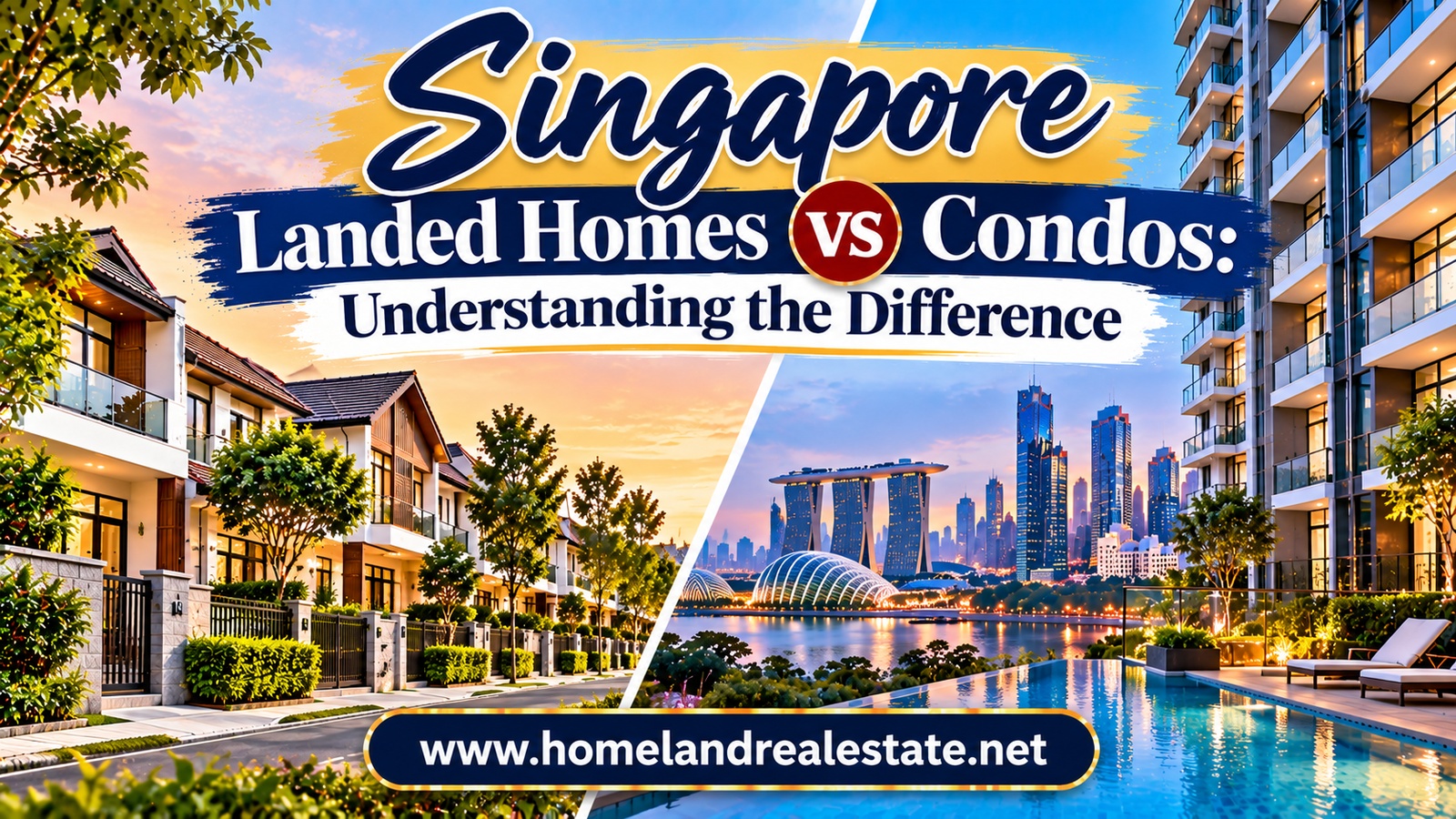
Choosing between a landed house and a condominium is one of the most important decisions you can make when exploring Singapore residential property. Both options can provide comfortable living, but they differ significantly in terms of space, ownership structure, maintenance, amenities, privacy, and long-term costs.
Understanding Singapore landed homes vs condos can help you identify which property type better matches your lifestyle, finances, and future plans. A landed home can provide greater control over private space, while a condominium can offer shared facilities, professional management, and access to a community-oriented living environment.
The decision is not simply about choosing a larger or smaller home. You also need to consider location, property condition, maintenance responsibilities, financing, accessibility, family requirements, and potential resale demand.
Whether you are a first-time buyer, an established homeowner, or an investor, comparing these two property categories carefully can help you make a more informed real estate decision.
What Are Landed Homes in Singapore?
Landed properties are residential homes where the owner has ownership interests associated with the land on which the property stands, subject to the applicable property title and ownership rules.
They can include different forms of houses, such as terrace houses, semi-detached houses, and detached houses.
One of the main attractions of Singapore landed homes is the sense of private space they can provide. Depending on the property, residents may have private outdoor areas, multiple floors, parking, and greater flexibility in how they use the home.
However, more space also means more responsibility. Owners may need to manage maintenance and repairs for areas that would otherwise be handled through shared building arrangements in a condominium.
What Are Condominiums?
Condominiums are private residential developments that typically combine individual residential units with shared facilities and common areas.
Depending on the development, residents may have access to facilities such as swimming pools, gyms, landscaped spaces, recreational areas, security arrangements, or other shared amenities.
Condominium living can therefore provide a different lifestyle from a landed property. Instead of managing an entire property independently, residents share certain facilities and building-related responsibilities through the development’s management arrangements.
Singapore Landed Homes vs Condos: Key Differences
The most important differences become clearer when you compare ownership, space, maintenance, amenities, privacy, and costs.
| Factor | Landed Homes | Condominiums |
| Private space | Generally more private space | Individual unit within a shared development |
| Outdoor area | May include private outdoor areas | Usually shared outdoor facilities, depending on development |
| Amenities | Typically privately managed | May include shared facilities |
| Maintenance | Greater responsibility for the homeowner | Common areas managed through development arrangements |
| Privacy | Often higher | Depends on building and unit location |
| Community facilities | Usually limited to the individual property | May include pools, gyms and recreational areas |
| Living style | More independent | More community-oriented |
| Property management | Primarily owner’s responsibility | Shared management for common areas |
The right choice depends on what you value most rather than one property type being universally better.
Space and Privacy
Space is one of the most obvious differences between the two options.
Advantages of Landed Homes
A landed property can provide more private living space and may offer several levels, bedrooms, parking areas, gardens, terraces, or other outdoor areas.
For larger families, this can make daily life more comfortable.
Private outdoor space can also provide opportunities for gardening, entertaining, children’s activities, or simply enjoying a quieter environment.
However, the amount and type of space varies between properties, so buyers should inspect the actual layout rather than relying on the property category alone.
Advantages of Condominiums
Condos generally provide a private residential unit within a larger development.
Although the individual unit may have less private outdoor space than a landed property, residents can sometimes access shared recreational facilities.
For buyers who prefer a more manageable home and do not need a large private garden, condominium living can be practical.
Maintenance Responsibilities
Maintenance is another important difference when comparing Singapore landed homes vs condos.
A landed homeowner generally has greater responsibility for maintaining the property. Roofs, external areas, gardens, walls, plumbing, fixtures, and other parts of the home may require attention depending on the property’s design and condition.
Condominium residents also have maintenance responsibilities inside their units, but common areas and shared facilities are generally handled through the development’s management structure.
This can make condominium living attractive to people who prefer a more structured approach to building maintenance.
However, shared maintenance does not mean maintenance is free. Owners should understand the applicable recurring management or maintenance contributions before purchasing.
Lifestyle and Amenities
Lifestyle preferences can strongly influence the decision between landed homes and condos.
Condominium Lifestyle
A condominium can suit buyers who enjoy shared amenities and community facilities.
Depending on the development, residents may have access to recreational facilities without having to maintain those facilities themselves.
This can be useful for households that value convenience and on-site leisure options.
Landed Lifestyle
A landed property usually provides a more private residential environment.
Instead of relying on shared facilities, homeowners have greater control over their own living areas.
This can appeal to families who value privacy, private outdoor space, entertaining areas, or the ability to personalise their home.
Location Considerations
Location is important regardless of which property type you choose.
A larger home in an inconvenient location may not meet your needs as effectively as a smaller property with excellent access to work, schools, public transport, shopping, and other amenities.
Access to Public Transport
Buyers should consider how easily they can reach MRT stations, bus services, major roads, and other transportation options.
This is particularly important for households that do not want to depend entirely on private vehicles.
Schools and Family Needs
Families should assess access to schools and everyday services.
Consider the time required for school runs, work commutes, shopping, healthcare, and other regular activities.
The best location is usually the one that works for your actual routine rather than simply looking attractive on a map.
Cost Considerations for Buyers
The financial comparison between Singapore landed homes vs condos should extend beyond the purchase price.
Home Loan Planning
Buyers should assess their borrowing capacity before choosing a property category.
A larger property can involve a larger financial commitment, while a condominium may have different ongoing expenses associated with shared facilities and building management.
Calculate the complete monthly housing budget rather than focusing only on the expected loan repayment.
Ongoing Property Expenses
Landed homeowners need to budget for repairs, renovations, landscaping, and other property-related expenses.
Condominium owners may have recurring management and maintenance contributions associated with shared facilities and common areas.
Both property types therefore have ongoing costs, but the nature of those costs can be different.
Renovation and Personalisation
Buyers who enjoy customising their homes may find landed properties particularly appealing.
Landed Home Renovation
A landed property may provide greater scope for personalisation, subject to the applicable planning, building, title, and development requirements.
Homeowners can potentially redesign rooms, improve outdoor areas, update kitchens, or make other changes within the relevant rules.
However, larger properties can also require more substantial renovation budgets and ongoing maintenance.
Condominium Renovation
Condominium owners can also renovate their units, but there may be development-specific rules governing renovation work.
Buyers should understand the relevant requirements before planning major changes.
It is important to check what alterations are permitted and whether approval is required.
Which Property Type Offers More Privacy?
Privacy is often a major reason buyers consider landed homes.
A landed property can provide greater separation from neighbouring households, particularly when it has its own outdoor areas and multiple levels.
Condos can offer good privacy as well, depending on the building’s design, unit position, floor level, and relationship with neighbouring units.
For buyers who value quiet living, inspect the property at different times and pay attention to sound from corridors, lifts, neighbouring units, roads, and shared facilities.
Singapore Landed Homes vs Condos for Families
Families should consider their current needs as well as future changes.
A landed home may appeal to families that need multiple bedrooms, larger living areas, private outdoor space, and greater room for children.
A condominium may be attractive to families who value security arrangements, recreational facilities, shared green spaces, and convenient access to amenities.
Neither option is automatically better for families. The right decision depends on household size, budget, location, lifestyle, and long-term plans.
Singapore Landed Homes vs Condos for Investors
Property investors should approach both categories objectively.
A condominium may provide access to a broader range of potential tenants depending on its location, size, facilities, and surrounding amenities.
A landed property may appeal to households seeking larger private homes, but the potential tenant pool can differ because of property size, location, and rental affordability.
Consider Rental Demand Carefully
Investors should identify the likely tenant profile before purchasing.
Consider whether the property suits professionals, families, students, expatriate households, or another group.
Location, transport, nearby amenities, property condition, layout, and competing properties can all influence tenant interest.
Consider Long-Term Ownership Costs
Investors should calculate maintenance, repairs, management contributions where applicable, insurance, financing costs, taxes, and other expenses.
Potential rental income should not be treated as guaranteed profit.
A property can experience vacancy periods, unexpected repairs, changing tenant preferences, and shifts in market conditions.
Resale Considerations
Resale appeal is another factor to consider when comparing Singapore landed homes vs condos.
For landed properties, factors such as location, plot characteristics, property condition, layout, accessibility, and surrounding development can influence buyer interest.
For condos, factors such as development quality, unit layout, floor level, views, facilities, maintenance arrangements, location, and overall market supply can affect resale appeal.
Buyers should focus on purchasing a property that makes sense for their own financial and lifestyle requirements rather than relying solely on assumptions about future price appreciation.
How to Choose Between a Landed Home and Condo
Start by identifying your priorities.
If private space, outdoor areas, privacy, and greater control over the property are important, a landed home may be worth exploring.
If shared amenities, convenience, building management, and a potentially more compact lifestyle appeal to you, a condominium may be a better match.
Create a Practical Buying Checklist
Before making a decision, compare:
- Total purchase cost
- Home loan affordability
- Ongoing maintenance expenses
- Property size and layout
- Parking requirements
- Public transport access
- Nearby schools and amenities
- Privacy and noise
- Renovation requirements
- Future family needs
- Potential resale appeal
A structured comparison can prevent buyers from becoming overly influenced by appearance or one attractive feature.
Frequently Asked Questions
1. What is the main difference between Singapore landed homes and condos?
The main difference is that landed homes provide a more private residential setting with associated land interests, while condos provide individual residential units within developments that typically include shared facilities and common areas.
2. Are landed homes more expensive to maintain than condos?
Landed homes can require more direct maintenance because owners are generally responsible for a larger private property, while condo owners contribute toward the management and maintenance of shared areas.
3. Are condos suitable for families in Singapore?
Condos can suit families that value convenient locations, shared facilities, security arrangements, and access to amenities, although the suitability depends on the individual development and family requirements.
4. Which is better for property investment, a landed home or condo?
Neither is automatically better because investment suitability depends on factors such as location, purchase cost, financing, tenant demand, ongoing expenses, property condition, and potential resale appeal.
5. What should buyers check before choosing between a landed home and condo?
Buyers should compare affordability, location, property size, maintenance costs, transport access, amenities, privacy, renovation requirements, building or property condition, and long-term housing needs.