
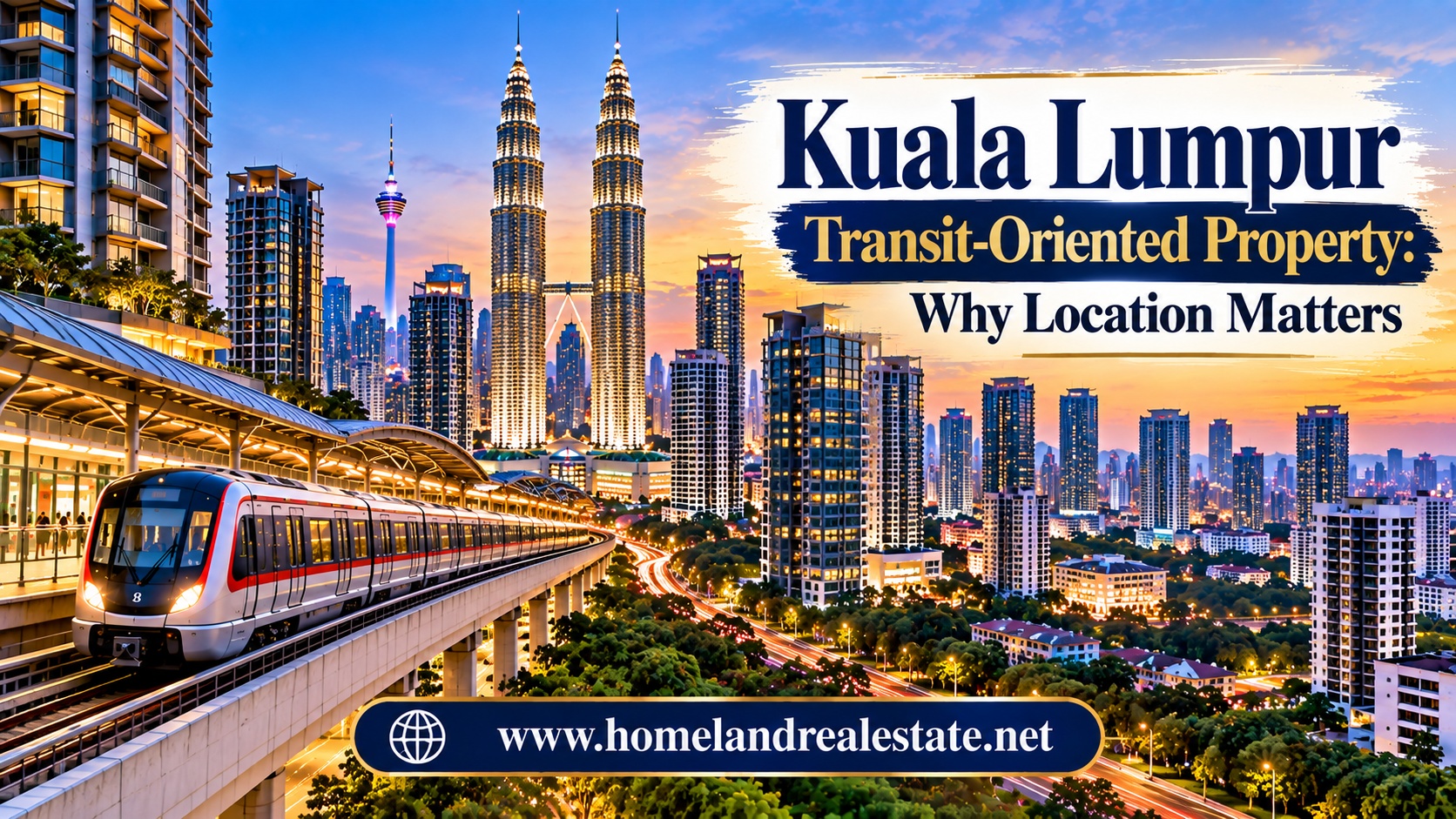
Location is one of the most important factors when buying residential property, and access to public transportation can make a major difference to everyday life. In a large urban environment such as Kuala Lumpur, living close to reliable transport connections can make commuting, shopping, education, and other daily activities more convenient.
Kuala Lumpur Transit-Oriented Property refers to homes and residential developments located close to public transportation networks and areas where transport access plays an important role in the surrounding neighbourhood. These properties can include condominiums, apartments, serviced residences, and other residential options.
For homebuyers, convenient transportation can reduce travel difficulties and make a location more practical. For property investors, transit access may make a home more appealing to certain tenant groups. However, being close to a station does not automatically make a property a good purchase.
This guide explains why Kuala Lumpur transit-oriented property can be attractive, what buyers should inspect, and how to evaluate transportation access as part of a broader property decision.
What Is Transit-Oriented Property?
Transit-oriented property is generally associated with residential or mixed-use development located close to public transportation.
The idea goes beyond simply living near a station. A strong transit-oriented location combines transportation access with walkability, everyday amenities, employment areas, and other destinations that residents regularly use.
Why the Concept Matters to Homebuyers
Your home affects how much time you spend travelling each day.
If public transportation is conveniently accessible, you may have more flexibility when commuting to work, visiting friends, shopping, or reaching other parts of the city.
However, buyers should examine the complete route rather than relying on a property’s advertised distance from a station.
Why Location Matters in Kuala Lumpur Property
The location of a property affects more than its convenience.
It can influence your daily routine, transportation choices, lifestyle, access to services, and the type of buyers or tenants who may be interested in the property later.
Kuala Lumpur property location should therefore be evaluated before you become attached to a particular building or apartment.
Look Beyond the Station
A nearby station is useful, but it is only one part of a successful location.
Consider whether the property also provides access to grocery stores, healthcare, schools, restaurants, offices, shopping, recreation, and other everyday needs.
A location becomes more practical when several important destinations can be reached without complicated journeys.
Public Transportation and Daily Commuting
One of the clearest advantages of Kuala Lumpur Transit-Oriented Property is the potential for easier commuting.
A home close to rail or other public transportation can be useful for people who regularly travel to employment centres, educational institutions, shopping districts, or other parts of the city.
Test Your Actual Commute
Do not rely solely on a map.
Before buying, test the route between the property and the destinations you visit most often. Consider walking time, transfers, waiting periods, and the final journey from the station to your destination.
A property that appears close to public transport may still require a complicated daily route.
Walkability Is a Key Part of Transit Access
A property can be located near a station but still be inconvenient to reach on foot.
This is why walkability near public transportation deserves careful attention.
Look at sidewalks, crossings, road conditions, lighting, entrances, pedestrian paths, and the overall walking environment.
Walk the Route Yourself
During a property viewing, walk from the development to the nearest station.
Pay attention to how comfortable the route feels.
If you expect to use public transportation every day, this short exercise can reveal practical issues that may not be visible in an online listing.
Access to Multiple Transport Options
A property may become more useful when residents have access to different transportation options.
Depending on the location, this could include rail connections, buses, roads, taxis, cycling options, or other forms of urban mobility.
Think About Flexibility
You may use public transport most days but still need a car for certain trips.
Therefore, check parking availability, road access, and the ease of reaching major destinations by different methods.
A flexible location can be useful when your work or lifestyle changes.
Nearby Amenities Add Value to Convenience
Transportation is most useful when it connects you to places that matter.
A home near a station but far from basic services may still require frequent additional travel.
Look for everyday amenities such as grocery stores, pharmacies, healthcare services, schools, restaurants, cafés, banks, and recreational facilities.
Consider the Complete Neighbourhood
Walk around the area instead of viewing only the property.
Think about what it would feel like to live there every day.
Can you buy essentials conveniently? Is the neighbourhood comfortable after dark? Are there useful services within reasonable reach?
These questions help turn a transportation-focused property search into a broader location assessment.
Property Types Near Transit Networks
Kuala Lumpur Transit-Oriented Property can take several forms.
Condominiums are common choices for buyers seeking urban convenience, while apartments, serviced residences, and other residential developments may also be available.
The property type matters because it affects space, facilities, maintenance, privacy, and ownership responsibilities.
Condos and Apartments
A condo near public transport may appeal to buyers who want a combination of convenience and shared facilities.
Inspect the building’s common areas, security arrangements, parking, lifts, facilities, and management.
Larger Residential Homes
Buyers seeking more space may consider low-rise homes or other residential properties near transportation connections.
These can offer different advantages but may require more direct maintenance and may not be as immediately connected to stations.
Transit Access and Property Investment
Investors often consider transportation when evaluating residential property because tenants may value convenient commuting.
A well-connected location can potentially broaden the appeal of a property to people who do not want to depend entirely on private vehicles.
However, transit-oriented property investment still involves risks.
Understand the Target Tenant
Consider who is likely to rent the property.
A compact apartment near a major transport connection may appeal to professionals, while larger properties may attract families or households with different requirements.
Unit size, layout, furnishings, building facilities, neighbourhood amenities, and total rental costs all influence tenant decisions.
Do Not Assume Guaranteed Returns
Transportation access can support property appeal, but it does not guarantee rental income, occupancy, or appreciation.
Investors should also examine maintenance costs, financing expenses, competing properties, property condition, tenant demand, and potential vacancy.
A strong investment decision requires a complete assessment rather than one attractive feature.
Building Quality Still Matters
A convenient location cannot compensate for a poorly maintained building.
When viewing a Kuala Lumpur transit-oriented property, inspect the actual building carefully.
Check entrances, corridors, lifts, parking areas, shared facilities, security features, and general maintenance.
Inspect the Individual Unit
Inside the property, look at:
- Walls and ceilings
- Windows and doors
- Flooring
- Bathrooms
- Kitchen fixtures
- Plumbing
- Electrical systems
- Storage
- Natural light
- Ventilation
If major repairs or renovation are required, factor those costs into your overall budget.
Noise and Urban Activity
Living near transportation can increase convenience, but it can also mean more activity.
Depending on the location, residents may experience road traffic, pedestrians, commercial activity, trains, buses, or nearby construction.
Visit at Different Times
Try to visit the property more than once if practical.
An area that seems quiet during the afternoon may have significantly more activity during commuting hours.
Listen carefully from inside the unit, especially near windows and balconies.
Understanding the noise environment before buying can help prevent unpleasant surprises later.
Future Development and Changing Accessibility
Urban neighbourhoods can change over time.
New transportation projects, roads, commercial developments, residential buildings, or infrastructure changes can influence accessibility and the character of an area.
However, buyers should avoid making decisions based on unconfirmed expectations.
Focus on What Exists Today
Evaluate the current transportation network and existing amenities first.
If you are considering future developments, understand that plans can change and completion may not occur as expected.
A property should make sense based on its existing fundamentals rather than relying entirely on future improvements.
Home Loans and Budget Considerations
Transportation convenience should never encourage you to exceed a comfortable property budget.
Before purchasing, consider the full financial commitment, including financing costs, maintenance, utilities, insurance where applicable, renovation, furnishing, and other ownership expenses relevant to your circumstances.
Compare Total Ownership Costs
Two condos located near public transport may have very different ownership costs.
One may have higher maintenance expenses, require renovation, or have different parking arrangements.
Look beyond the advertised purchase price and compare the complete financial picture.
Comparing Transit-Oriented and Less Connected Properties
| Factor | Transit-Oriented Property | Less Transit-Connected Property |
| Commuting | Often more convenient for public transport users | May require more driving or additional connections |
| Walkability | Can be stronger near established stations | Depends heavily on neighbourhood design |
| Amenities | Often benefits from nearby services | May be more residential or spread out |
| Tenant appeal | Can suit transport-focused renters | May appeal to buyers prioritising space or privacy |
| Lifestyle | More connected urban environment | Potentially quieter or less concentrated |
| Main consideration | Actual transport convenience | Road access and overall location |
Neither type is automatically better. The right choice depends on your lifestyle, budget, and transportation needs.
Family Considerations
Families should evaluate transit-oriented properties differently from individual buyers.
Public transportation can make school, work, shopping, and other trips easier. However, families may also prioritise larger floor plans, storage, parking, nearby schools, recreational facilities, and quieter surroundings.
Consider the Whole Family Routine
Think about how each family member travels.
A property may be excellent for one person’s commute but inconvenient for another.
The best family property should provide a reasonable balance between transportation, space, amenities, and daily comfort.
Home Improvement and Renovation
If the property requires improvement, assess the work before purchasing.
A well-located apartment may still need updates to the kitchen, bathrooms, flooring, lighting, storage, or other areas.
Prioritise Practical Improvements
Focus on improvements that make the property more comfortable and functional.
For example, better storage can be more useful than purely decorative changes.
If building rules or approvals affect planned renovations, confirm the applicable requirements before beginning work.
How to Choose the Right Transit-Oriented Property
Before making an offer, create a practical checklist.
Start with your regular destinations. Identify the transport connections you actually need, then assess walking access, nearby amenities, building condition, unit quality, noise, parking, maintenance, and financing.
Visit several properties rather than comparing only online listings.
Compare Locations, Not Just Buildings
A beautiful condo in an inconvenient neighbourhood may be less suitable than a simpler property in a highly practical location.
When comparing Kuala Lumpur Transit-Oriented Property, consider the relationship between the home, station, workplace, services, and wider neighbourhood.
The best property should make your overall routine easier.
FAQs About Kuala Lumpur Transit-Oriented Property
1. What is transit-oriented property?
Transit-oriented property generally refers to residential real estate located close to public transportation and supported by convenient access to surrounding services and destinations.
2. Why is public transportation important when buying property in Kuala Lumpur?
Convenient public transportation can make commuting and everyday travel easier, particularly for buyers who regularly travel to employment centres, schools, shopping areas, or other parts of the city.
3. Is a property near a train station automatically a good investment?
No, because investors should also consider tenant demand, property condition, ownership costs, financing, competition, location quality, and investment risks.
4. What should buyers check when viewing a transit-oriented condo?
Buyers should check the actual walking route, transport connections, nearby amenities, building condition, unit quality, noise levels, parking, maintenance costs, and overall affordability.
5. Should families consider transit-oriented homes?
Yes, but families should evaluate transportation alongside space, schools, healthcare, parking, recreation, storage, safety considerations, and the needs of every household member.