
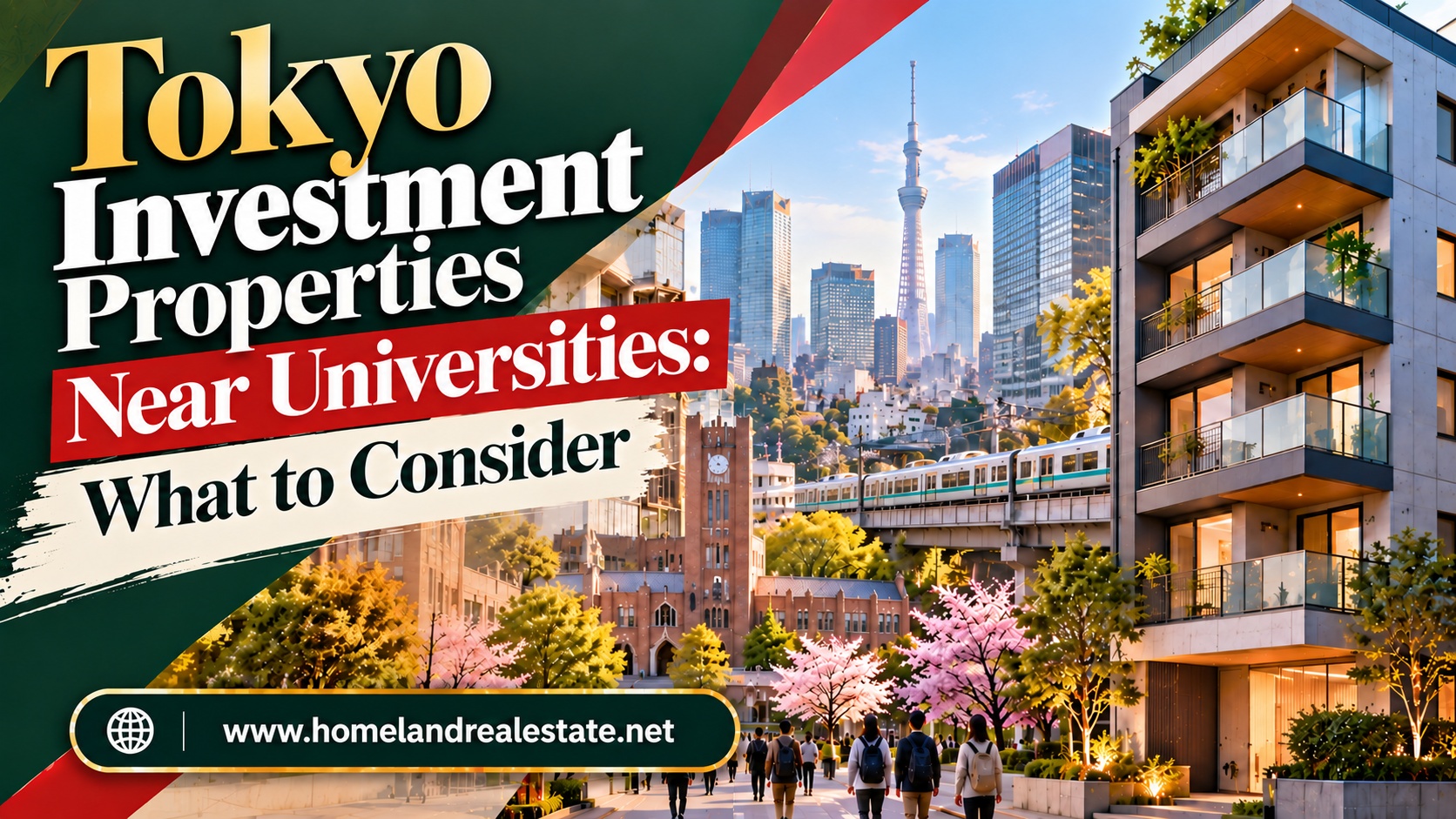
Tokyo is one of the world’s most established urban property markets, with a wide range of apartments, residential buildings, and investment opportunities. For investors considering Tokyo investment properties near universities, proximity to educational institutions can be an important factor because universities create established communities of students, faculty members, researchers, and other residents.
However, buying a property near a university is not simply about choosing the closest building to a campus. You need to consider the location, tenant demand, property condition, transportation, building management, local surroundings, financing, and long-term ownership costs.
A property that looks attractive because it is close to a university may not automatically be a strong investment. Careful research can help you understand whether the property fits your investment goals, budget, and risk tolerance.
Why Consider Tokyo Investment Properties Near Universities?
University areas can offer several characteristics that appeal to residential property investors. Educational institutions often create consistent movement of people into and around a neighbourhood. This can support demand for rental housing, particularly for smaller apartments suited to individual occupants.
For investors, Tokyo investment properties near universities may therefore provide an opportunity to target a clearly identifiable tenant group. Students can create demand for compact apartments, while university employees and researchers may have different preferences for size, location, and amenities.
The important point is that tenant demand should be evaluated rather than assumed. A university can be nearby while the surrounding area still has strong competition from other rental properties.
A Clearly Defined Tenant Market
A university neighbourhood can make it easier to identify potential renters. Students may value short commuting distances, convenient train access, affordable living arrangements, and nearby daily necessities.
Other potential tenants may include teaching staff, administrative employees, researchers, visiting academics, and young professionals who prefer well-connected neighbourhoods.
Understanding these groups can help you decide what type of property makes sense.
Convenience Can Support Residential Demand
University areas are often connected to shops, restaurants, convenience stores, public transportation, and other everyday services. These features can make an area attractive beyond the academic institution itself.
For an investor, this broader neighbourhood appeal matters. A property should ideally have reasons for people to live there even if the tenant is not directly associated with the university.
Location Matters More Than Campus Proximity
One of the biggest mistakes when evaluating Tokyo investment properties near universities is focusing only on distance from the campus.
A property that is very close to a university may have drawbacks that are not obvious from a map. Noise, limited privacy, difficult road access, weak transportation connections, or an oversupply of rental apartments can affect its attractiveness.
Instead of asking only how close the property is to the university, examine the entire neighbourhood.
Evaluate Transportation Access
Tokyo tenants often place significant importance on transportation convenience. Check the distance to nearby railway or subway stations and consider the routes available from those stations.
A property with convenient access to multiple destinations may appeal to a broader tenant base than one that mainly serves students attending a single nearby institution.
Walking routes also deserve attention. Visit the area at different times if possible and assess the route between the property, station, university, shops, and other important facilities.
Examine the Surrounding Environment
Look beyond the property boundary. Consider nearby streets, residential buildings, restaurants, supermarkets, convenience stores, parks, and public facilities.
The character of the neighbourhood can influence how long tenants want to remain there. A convenient area with a pleasant residential environment may have broader appeal than a location that depends entirely on university activity.
Understand the Property Type
Not all Tokyo investment properties near universities serve the same purpose. The appropriate property depends on the type of tenant you want to attract and your investment strategy.
Compact apartments may suit individual students or young professionals. Larger apartments could appeal to staff members, couples, or small households.
Older buildings can sometimes provide different purchasing opportunities from newer properties, but condition and future maintenance should receive careful attention.
Newer Apartments
Newer apartments may offer modern layouts, updated facilities, and contemporary building features. These characteristics can make a property easier to position toward tenants who value comfort and convenience.
However, a newer property should still be assessed carefully. A higher purchase cost does not automatically mean stronger rental performance.
Older Apartments
Older apartments can have different advantages and challenges. Some may have established locations, larger layouts, or distinctive characteristics that appeal to certain renters.
At the same time, you should investigate the building’s maintenance history, structural condition, common areas, equipment, and potential future repair requirements.
The purchase decision should be based on the whole property rather than age alone.
Study the Rental Market Before Buying
Before purchasing Tokyo investment properties near universities, investigate the existing rental market in the immediate area.
Look at comparable apartments rather than relying on broad assumptions about Tokyo. Compare properties with similar locations, sizes, layouts, building ages, and facilities.
This research can help you understand the competitive position of the property.
Identify Your Likely Tenant
Ask who would realistically rent the apartment.
If the property is a small studio near a university, students may be a natural target. If it is a larger apartment close to several transportation routes, the potential tenant pool may be wider.
A broader tenant base can sometimes reduce dependence on one specific group.
Check Competing Properties
Study nearby rental buildings and identify what they offer. Consider apartment size, condition, furnishings, facilities, station access, and general presentation.
You should also consider how easily another landlord could offer a similar apartment to prospective tenants.
Strong competition can affect how quickly a property attracts renters and how much flexibility you have when positioning the unit.
Consider Vacancy and Tenant Turnover
University-oriented rental properties can have a distinctive tenant cycle. Student tenants may have shorter or more predictable periods of occupancy than some working professionals.
This does not make university-area property automatically risky, but it means you should consider vacancy periods, tenant turnover, advertising, cleaning, repairs, and administrative work.
Your financial model should allow for periods when the property is not generating rental income.
A responsible investment assessment should not assume continuous occupancy.
Calculate the Full Cost of Ownership
The purchase price is only one part of the cost of owning an investment property.
When evaluating Tokyo investment properties near universities, consider acquisition-related expenses, financing costs, property management, maintenance, insurance where applicable, taxes, building fees, repairs, vacancy periods, and other ownership expenses.
A property can appear attractive based on rental income alone while becoming less appealing after recurring costs are included.
Include Future Maintenance
Every residential property requires maintenance over time. Apartments may need repairs to fixtures, appliances, plumbing, electrical systems, interior finishes, or other components.
For apartment buildings, owners may also have obligations associated with common areas and building management.
Review available building information and management records carefully before making a decision.
Think Carefully About Financing
If you plan to use a home loan or property financing, understand the terms before committing to the purchase.
Interest rates, loan duration, eligibility, down payment requirements, fees, currency considerations, and repayment obligations can influence the overall investment structure.
International buyers may face different financing considerations from domestic purchasers. It is important to confirm current requirements with qualified financial or lending professionals rather than relying on assumptions.
Your investment should remain manageable even if rental conditions change.
Consider Property Management
Managing a rental property from a distance can be challenging. This is particularly relevant for overseas investors considering Tokyo investment properties near universities.
A professional property manager may assist with tenant communication, maintenance coordination, leasing, and other administrative responsibilities.
However, management services come at a cost. Compare what is included, how fees are calculated, and which responsibilities remain with the property owner.
If you plan to manage the property yourself, consider how you would respond to maintenance issues, tenant questions, vacancies, and emergencies.
Look Beyond Student Demand
A strong university-area property should ideally have appeal beyond one tenant category.
Universities can change their programmes, campus arrangements, accommodation patterns, or student demographics over time. A property that only works under one narrow scenario may carry greater long-term risk.
Transportation access, neighbourhood services, employment centres, and general residential appeal can make a property more adaptable.
Evaluate the Area’s Long-Term Appeal
When researching Tokyo investment properties near universities, think beyond the next tenant.
Ask whether the neighbourhood offers qualities that could remain attractive over many years. Convenient transportation, established services, a stable residential environment, and access to multiple parts of Tokyo can all contribute to broader housing demand.
This does not guarantee appreciation or rental growth. It simply helps you evaluate the property from a longer-term perspective.
Inspect the Building and Legal Documents
Property research should include more than an online listing.
Review the property’s condition, floor plan, building management information, ownership documents, applicable restrictions, and other relevant records with appropriate professional assistance.
For condominium properties, investigate the building’s management arrangements and planned or necessary maintenance.
If buying land or a property with redevelopment potential, additional considerations may apply, including zoning, building restrictions, access, and permitted uses.
Professional legal, tax, and property advice can help you understand matters that are difficult to evaluate independently.
Compare Several Tokyo Locations
Do not limit your research to one university or one neighbourhood.
Compare several areas based on transportation, tenant demand, property supply, building quality, neighbourhood services, and purchase costs.
A property farther from a campus but closer to a major station may potentially attract a wider group of renters. Another property may benefit from a quieter residential setting.
The best choice depends on your objectives rather than a single location feature.
Create a Realistic Investment Plan
Before purchasing, write down your investment goals.
Decide whether your priority is rental income, long-term ownership, diversification, personal use combined with investment, or another objective.
Then establish a realistic budget that includes the purchase and ongoing costs.
Your analysis should consider conservative assumptions rather than relying on the most optimistic rental scenario.
Questions to Ask Before Buying
Before committing to Tokyo investment properties near universities, ask:
- Who is the most likely tenant?
- How much competing rental supply exists nearby?
- How convenient is public transportation?
- What condition is the building in?
- What ongoing costs will I have?
- How will the property be managed?
- What happens if the apartment remains vacant?
- Is the property appealing beyond university-related demand?
- How does financing affect the overall cost?
- Does the property fit my long-term investment objectives?
These questions can help turn a general property search into a structured investment evaluation.
Frequently Asked Questions
1. Are Tokyo investment properties near universities suitable for first-time investors?
They can be considered by first-time investors, but beginners should carefully evaluate tenant demand, property condition, financing, management costs, vacancy risk, and the broader neighbourhood before purchasing.
2. Should investors buy a property as close to a university as possible?
Not necessarily, because transportation access, neighbourhood quality, competing rental supply, property condition, and broader tenant appeal can be just as important as campus proximity.
3. What type of apartment may appeal to university-area tenants?
Compact apartments can appeal to individual students and young professionals, while larger units may attract university employees, couples, families, or other residential tenants depending on the location.
4. Is student demand enough to make a university-area property a good investment?
Student demand alone should not determine the purchase decision, because vacancy, tenant turnover, competition, operating expenses, financing costs, and changes in local demand can all affect investment performance.
5. Should overseas buyers use professional property management in Tokyo?
Professional management can be useful for overseas owners who cannot easily handle tenant communication and maintenance locally, but investors should compare management services and fees before making a decision.