
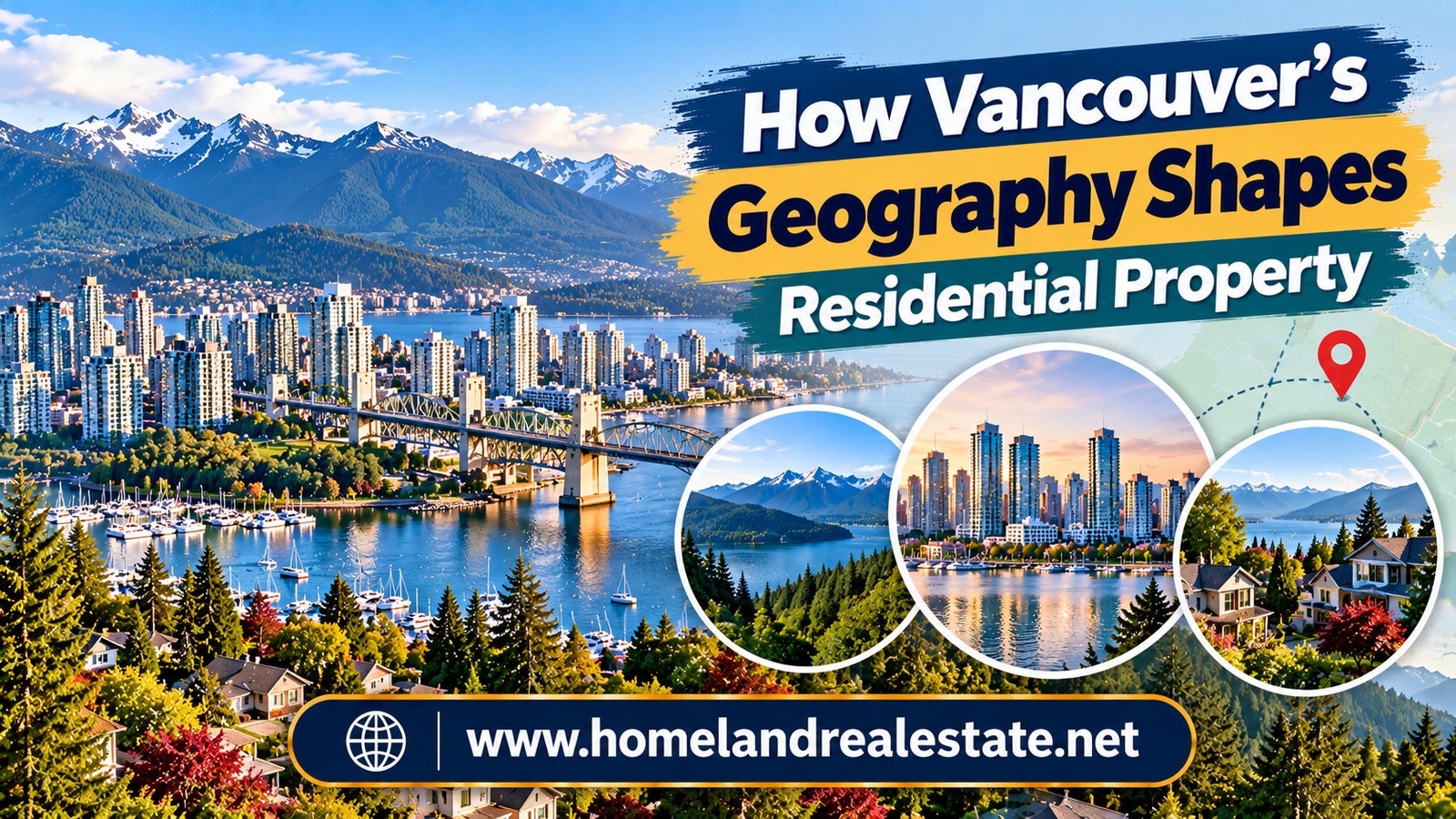
Vancouver is known for its attractive combination of mountains, coastline, urban neighbourhoods, and access to outdoor spaces. These geographic features do more than define the city’s appearance. They also influence where homes are built, what types of properties are available, how neighbourhoods develop, and what buyers consider when choosing a place to live.
Understanding Vancouver’s geography shapes residential property decisions is important for homebuyers, homeowners, and investors. The city’s physical setting creates opportunities for waterfront living, hillside homes, established neighbourhoods, and higher-density developments. At the same time, limited land and natural boundaries can create challenges for construction, transportation, and property planning.
For anyone considering residential real estate in Vancouver, geography should be part of the buying decision. A property’s location affects more than its address. It can influence accessibility, views, lot size, building design, outdoor space, maintenance requirements, and long-term suitability.
Vancouver’s Geography and Its Influence on Housing
Vancouver sits between the Pacific Ocean and the Coast Mountains, with a developed urban area surrounded by significant natural features. This setting gives the city a distinctive residential landscape.
The combination of water, mountains, established communities, and urban infrastructure means that available land cannot simply be treated as an unlimited resource. Developers and homeowners must work within the physical characteristics of each area.
Limited Land Can Influence Housing Density
One of the clearest ways Vancouver’s geography shapes residential property is through land availability.
When developable land is limited, housing options can become more diverse. Instead of relying entirely on large detached lots, residential development can include condos, townhomes, apartments, and other forms of higher-density housing.
For buyers, this means that property searches should not focus only on square footage. The type of property, building design, neighbourhood setting, and access to services can be equally important.
Natural Features Create Different Residential Environments
The presence of mountains, waterways, parks, and established urban areas creates different living environments across Vancouver.
Some buyers may prefer the privacy and outdoor space associated with detached homes. Others may prioritize a condo close to employment centres, restaurants, shops, and public transportation.
Geography helps create these differences, making location one of the most important factors in Vancouver residential real estate.
Mountains and Their Effect on Residential Property
The mountains north of Vancouver are one of the city’s defining geographic features. Their presence contributes to views, neighbourhood character, outdoor recreation, and the visual appeal of many properties.
Mountain Views Can Influence Buyer Preferences
A home with a clear mountain outlook can offer a different living experience from a property surrounded by dense urban development.
Views may be particularly relevant when comparing homes in different parts of the city. However, buyers should avoid assuming that a current view will always remain unchanged. Nearby development, construction, vegetation, and planning decisions can affect what a property overlooks.
Before purchasing a home primarily because of its view, buyers should investigate the surrounding area and understand the broader neighbourhood context.
Hillside Properties Require Additional Consideration
Properties located on slopes can have characteristics that differ from homes on flatter land.
Buyers should pay attention to the property’s access, drainage, landscaping, outdoor areas, and overall condition. Homeowners considering renovations may also need to understand how the site’s physical characteristics affect construction planning.
A professional property inspection can help identify issues that may not be obvious during a normal viewing.
Vancouver’s Waterfront and Coastal Influence
The coastline is another major element of Vancouver’s geography shapes residential property. Waterfront and water-adjacent neighbourhoods can provide attractive surroundings, recreational opportunities, and distinctive residential settings.
However, living close to water also means buyers should think carefully about the property’s exposure and maintenance needs.
Waterfront Living Is About More Than the View
A waterfront property may attract buyers because of scenery and access to outdoor activities. Yet practical considerations remain important.
Buyers should evaluate:
- The property’s exposure to weather and moisture
- Building condition and maintenance history
- Outdoor space and landscaping requirements
- Access to transportation and daily services
- The condition of exterior materials and common areas
- Potential renovation requirements
The objective should be to assess the complete property rather than focusing only on its waterfront setting.
Condos Near the Water
Water-adjacent areas can also offer condominium housing. Condos may appeal to buyers who want access to desirable locations without the responsibilities associated with maintaining a large detached property.
However, condo buyers should review the building’s condition, maintenance arrangements, strata fees, rules, and financial documents before making a decision.
Urban Density and Property Types
Vancouver’s geography has contributed to a varied residential market where different forms of housing exist within relatively close proximity.
Detached houses, townhomes, condos, and apartments can serve different buyer needs.
Detached Homes
Detached homes can provide greater privacy, outdoor space, and control over the property. They may suit families who need multiple bedrooms, a yard, parking, or additional space for home offices.
However, buyers should consider the full cost of ownership. Maintenance, repairs, landscaping, property improvements, and other expenses can be more significant than with some condominium properties.
Condos and Apartments
Condos can provide an alternative for buyers who prioritize location, convenience, and lower personal maintenance responsibilities.
Many condominium developments place residents close to shops, restaurants, transit, employment areas, and recreational facilities.
For buyers comparing properties, the right choice depends on lifestyle, finances, household size, and long-term plans.
Townhomes as a Middle Ground
Townhomes can offer a balance between detached houses and condos. They may provide more private outdoor space than many apartments while requiring less individual property maintenance than a detached home.
For growing households, this type of housing can be worth considering when location and budget make a detached property less suitable.
Transportation and Residential Location
Geography also affects transportation patterns. Major roads, bridges, transit routes, and neighbourhood connections influence how easily residents can move between different parts of the metropolitan area.
For homebuyers, transportation should be evaluated alongside the property itself.
Commute Time Matters
A property that appears attractive on paper may become less appealing if commuting to work, school, or essential services is difficult.
Before buying, consider your regular travel routes. Visit the area at different times of day if possible and assess how practical the location is for your routine.
Transit Access Can Add Practical Value
Properties close to public transportation may appeal to buyers who prefer not to rely entirely on private vehicles.
However, proximity to transit should be considered together with noise, traffic, neighbourhood activity, and the overall quality of the surrounding environment.
Parks, Green Spaces, and Residential Appeal
Vancouver’s natural environment also contributes to the appeal of many residential neighbourhoods.
Access to parks, walking routes, recreational areas, and green spaces can make a neighbourhood more attractive to households that value outdoor activities.
Outdoor Access Can Influence Lifestyle
For families, access to parks may be particularly useful. Homeowners may also value nearby walking and cycling opportunities.
When comparing two similar properties, the surrounding environment can become an important deciding factor.
Buyers should therefore assess not only the home’s interior but also the neighbourhood’s streets, public spaces, recreational facilities, and access routes.
Construction and Home Improvement Considerations
The physical setting of a property can influence construction and maintenance decisions.
Different sites can have different requirements based on slope, drainage, exposure, access, and existing structures.
Inspect the Property Before Buying
A detailed inspection is an important part of evaluating residential real estate.
Look beyond cosmetic features and consider the condition of the roof, exterior, drainage, windows, heating systems, plumbing, electrical systems, and other major components.
For condos, buyers should also investigate the building rather than examining only the individual unit.
Think Carefully About Renovations
Homeowners planning improvements should consider the property and its surrounding conditions before starting a project.
A renovation that appears simple may involve structural, access, drainage, or design considerations depending on the property.
Professional advice can be valuable when a project involves significant construction or changes to the building.
How Geography Can Affect Property Investment Decisions
Investors should also understand how location and geography interact with residential property demand.
A property’s investment potential should never be judged solely by its views, proximity to water, or neighbourhood reputation. Investors should examine the fundamentals of the property and its location.
Consider Long-Term Suitability
A property may be attractive because it is near employment centres, transportation, education, shopping, parks, or recreational areas. These characteristics can influence who may want to live there.
However, market conditions can change. Investors should evaluate costs, financing, maintenance, vacancy considerations, taxes, and other relevant factors before purchasing.
Location Does Not Eliminate Risk
Even a well-located property can involve financial risk. Interest rates, market conditions, maintenance costs, changing neighbourhood conditions, and unexpected repairs can affect ownership outcomes.
A sound investment decision should therefore be based on affordability and careful research rather than assumptions about guaranteed appreciation.
What Homebuyers Should Look for in Vancouver
Understanding Vancouver’s geography shapes residential property choices can make property searches more focused.
Rather than choosing a home based only on appearance, buyers should create a practical checklist.
| Factor | What Buyers Should Consider |
| Location | Distance to work, schools, services, and amenities |
| Property type | Detached home, condo, townhouse, or apartment |
| Terrain | Slope, access, drainage, and outdoor space |
| Views | Current outlook and surrounding development |
| Transportation | Transit, roads, walking, and cycling options |
| Maintenance | Expected repairs and ongoing upkeep |
| Financing | Mortgage affordability and additional ownership costs |
| Neighbourhood | Lifestyle, surroundings, and long-term suitability |
This approach helps buyers compare properties based on their actual needs rather than relying on a single attractive feature.
How Geography Shapes Different Buyer Choices
Different households experience Vancouver’s geography in different ways.
Families
Families may prioritize bedrooms, outdoor space, schools, parks, transportation, and neighbourhood convenience. A detached house or townhouse may provide the space they need, while a condo can work well when location and convenience are more important.
First-Time Buyers
First-time buyers may need to balance affordability with location. Condos and smaller properties can provide an entry point into residential ownership while keeping the search focused on neighbourhood accessibility.
Downsizers
Homeowners who no longer need a large property may prefer a condo or smaller home. Reduced maintenance and convenient access to services can become more important than having a large yard.
Property Investors
Investors may focus more heavily on location, property condition, tenant suitability, operating costs, and long-term financial considerations.
In every case, geography provides the foundation, but individual needs determine which property makes sense.
Frequently Asked Questions
1. How does Vancouver’s geography affect residential property?
Vancouver’s mountains, coastline, limited developable land, and urban infrastructure influence property locations, housing types, neighbourhood density, and buyer preferences.
2. Are waterfront properties different from other Vancouver homes?
Waterfront properties can have unique views and surroundings, but buyers should also consider maintenance, weather exposure, building condition, access, and the wider neighbourhood.
3. Does Vancouver’s terrain affect home maintenance?
Terrain can affect drainage, landscaping, accessibility, and certain construction considerations, so buyers should evaluate the property’s physical characteristics before purchasing.
4. Should buyers consider geography when choosing a condo?
Yes. Condo buyers should consider location, transportation, views, surrounding development, building condition, access to services, and the property’s overall suitability.
5. How can investors use geographic factors when evaluating Vancouver property?
Investors can consider how location, transportation, amenities, neighbourhood characteristics, property type, and physical conditions may affect the property’s suitability and long-term demand, while also assessing financial risks and ownership costs.