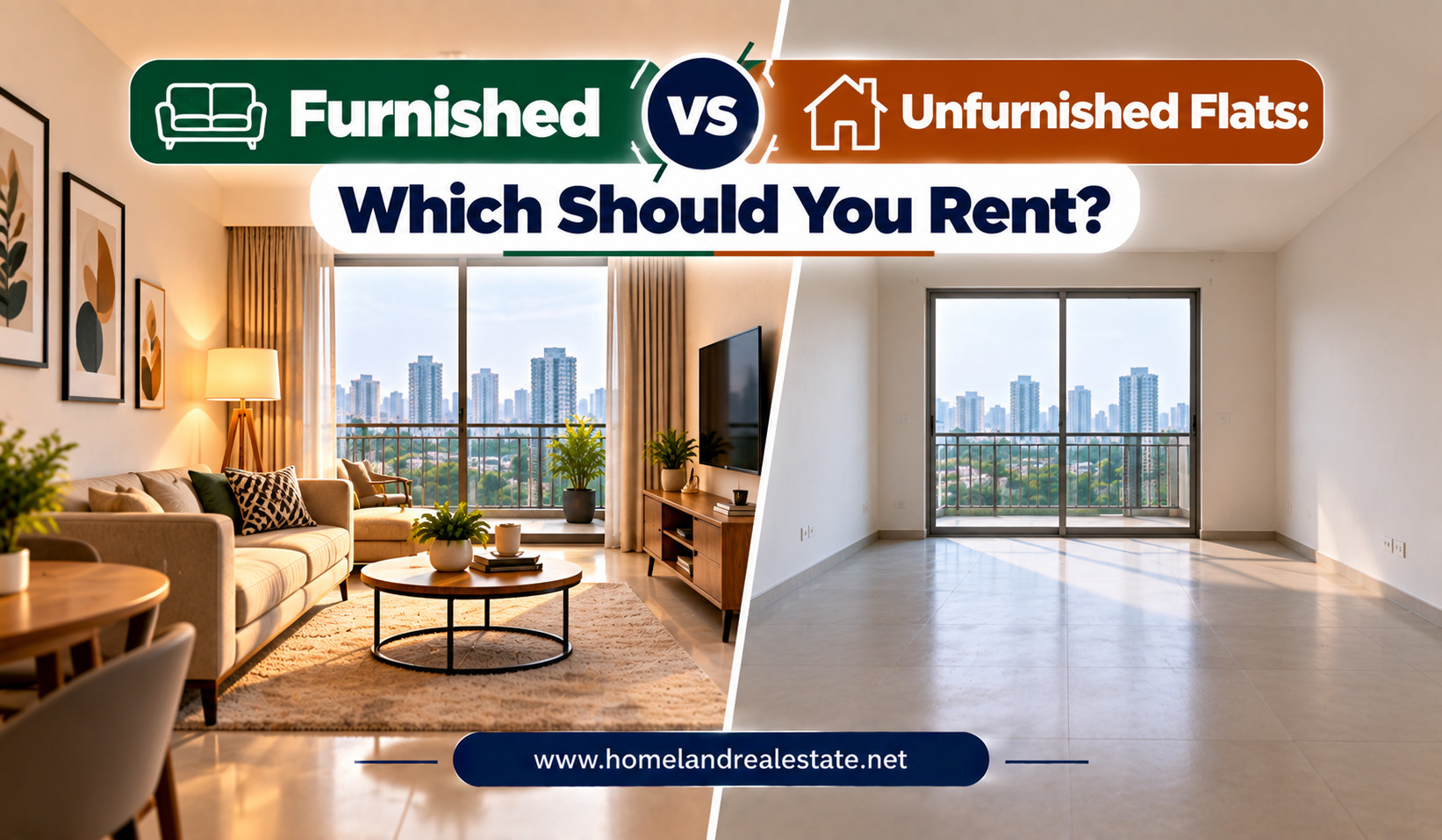
Choosing a rental home involves more than comparing rent and location. One of the most important decisions tenants face is whether to choose a furnished or unfurnished flat. Both options have advantages and disadvantages, and the right choice depends on your budget, lifestyle, duration of stay, and personal preferences.
A furnished flat can make moving easier because many essential items are already available. An unfurnished flat, on the other hand, gives you more freedom to arrange the space according to your preferences and may offer lower monthly rent.
Before signing a rental agreement, it is worth understanding the difference between furnished vs unfurnished flats and considering the costs involved beyond the advertised rent.
What Is a Furnished Flat?
A furnished flat generally comes with furniture and, depending on the property, several appliances or household essentials.
The exact contents can vary significantly. A fully furnished property may include beds, wardrobes, sofas, dining furniture, kitchen appliances, refrigerators, washing machines, air conditioners, curtains, lights, fans, and other items.
A semi-furnished flat may include only basic fixtures and selected furniture or appliances.
Because there is no universal definition of “furnished,” tenants should always ask for a detailed inventory before moving in.
What Is an Unfurnished Flat?
An unfurnished flat generally comes with little or no movable furniture. However, this does not necessarily mean the property is completely empty.
It may still have permanent fixtures such as electrical fittings, bathroom fixtures, kitchen cabinets, plumbing connections, fans, lights, or other built-in features.
The exact condition varies from property to property, so it is important to inspect the flat personally and confirm what is included.
An unfurnished home is often preferred by tenants who already own furniture or want to create their own living environment.
Furnished Flats Offer Convenience
One of the biggest benefits of renting a furnished flat is convenience.
If you are moving to a new city for work or education, transporting large furniture items can be expensive and time-consuming. A furnished property can allow you to move in with fewer belongings.
This can be particularly useful for professionals on short-term assignments, students, newly relocated employees, or people who expect to move again within a relatively short period.
Instead of purchasing a bed, sofa, refrigerator, washing machine, and other essentials, you can use the items already provided by the landlord.
Unfurnished Flats Provide More Freedom
An unfurnished flat gives you greater control over how you use the space.
You can select your own furniture based on your preferences, budget, room dimensions, and lifestyle.
For people who already own furniture, this can make an unfurnished property considerably more practical.
You also avoid being tied to the landlord’s choice of furniture. If you prefer a particular mattress, desk, sofa, or storage system, you can choose exactly what works for you.
However, purchasing furniture can require a substantial initial investment.
Compare the Total Cost, Not Just the Rent
Furnished properties often have higher rent because the landlord is providing furniture and appliances.
However, the difference in rent should be compared with the cost of furnishing an unfurnished home.
Imagine that a furnished flat costs ₹5,000 more per month than an otherwise similar unfurnished property. Over one year, that represents ₹60,000 in additional rent.
If furnishing the unfurnished property would cost significantly more than ₹60,000, the furnished option may provide better short-term value.
On the other hand, if you plan to stay for several years and already own most of the necessary furniture, paying higher rent for a furnished property may not make financial sense.
Consider How Long You Will Stay
The expected length of your tenancy is one of the most important factors.
For short-term renters, furnished accommodation can often be more convenient because you avoid purchasing and later selling or transporting furniture.
For long-term tenants, an unfurnished flat may become more attractive, especially if you already own furniture or want to invest in items that you can use for many years.
There is no fixed rule, but your expected duration of stay should play a major role in the decision.
Moving Costs Matter
Moving furniture from one property to another can be expensive.
If you own large items, you may have to pay for transportation, packing, loading, unloading, and sometimes storage.
With a furnished rental, your moving process can be much simpler.
However, furnished rentals do not eliminate all moving costs. You may still have personal belongings, electronics, kitchen items, clothes, and other possessions to transport.
Consider your complete moving expense when comparing the two options.
Maintenance Can Be Different
Furniture and appliances provided by the landlord require maintenance.
If a refrigerator, washing machine, air conditioner, bed, sofa, or other included item develops a problem, it is important to know who is responsible for repairs.
Do not assume that the landlord will automatically pay for every issue.
The rental agreement should clearly explain maintenance responsibilities and what happens if an included appliance stops working.
For furnished flats, maintaining an inventory of the supplied items is especially important.
Check the Condition of Furniture and Appliances
Never choose a furnished flat simply because it contains more items.
Inspect the condition of every major piece of furniture and appliance.
Check mattresses, sofas, cupboards, tables, chairs, refrigerators, washing machines, air conditioners, water heaters, and other included equipment.
Look for damage, stains, broken components, unusual sounds, leaks, or signs of poor maintenance.
Take photographs or videos before moving in and keep a copy of the inventory. This can help establish the property’s condition and reduce disagreements about the security deposit when you leave.
Storage Can Be an Issue
Furnished flats can sometimes provide less flexibility in terms of space because furniture is already occupying rooms.
For example, a bedroom may contain a large bed and wardrobe, leaving limited room for your own belongings.
An unfurnished flat allows you to select furniture that fits your space more efficiently.
If storage is important to you, check wardrobes, kitchen cabinets, shelves, lofts, and other storage areas before making a decision.
Furnished Flats Can Be Ideal for Relocation
People relocating for work often prefer furnished accommodation because they may not know how long they will remain in the city.
Buying furniture immediately after relocation can create unnecessary expenses if you later move to another city.
A furnished flat can provide a ready-to-live-in solution while allowing you to focus on settling into your new job and neighbourhood.
This convenience can be especially valuable when the relocation happens quickly.
Unfurnished Flats May Suit Families and Long-Term Tenants
Families staying in one property for many years may prefer an unfurnished home.
They can gradually purchase furniture based on their needs and build a living space that feels more personal.
An unfurnished property can also be useful for tenants who already have furniture from a previous home.
Instead of paying additional rent for furniture they do not need, they can use their existing belongings.
Think About Your Lifestyle
Your lifestyle should influence the decision.
Someone who travels frequently may prefer a furnished flat because it reduces the effort involved in setting up and moving.
Someone who works from home may want a specific desk, chair, storage system, and room arrangement, making an unfurnished property more attractive.
Students may value affordability and convenience, while families may prioritise storage, durability, and long-term comfort.
There is no single best choice because different tenants have different requirements.
Read the Rental Agreement Carefully
Whether the flat is furnished or unfurnished, carefully review the rental agreement before signing.
For furnished properties, pay special attention to the inventory and condition of included items.
Confirm which furniture and appliances are part of the rental arrangement. Check whether there are restrictions on moving, replacing, or storing the landlord’s furniture.
Also understand the security deposit, maintenance responsibilities, notice period, rent increases, and conditions for returning the property.
Everything important should be documented rather than based only on verbal promises.
Furnished vs Unfurnished: Which Is Better?
A furnished flat is generally more suitable if you want convenience, expect to stay for a shorter period, are relocating, or do not want to spend money purchasing furniture.
An unfurnished flat may be better if you already own furniture, plan to stay for several years, want greater control over the interior, or want to minimise ongoing rent.
The best option depends on the relationship between rent, furnishing costs, moving expenses, tenancy duration, and your lifestyle.
Final Thoughts
The choice between furnished vs unfurnished flats should not be based only on which option has the lower monthly rent.
Consider the total financial cost, how long you expect to stay, whether you already own furniture, moving expenses, maintenance responsibilities, available storage, and the level of convenience you want.
Before renting a furnished property, carefully inspect every included item and document its condition. For an unfurnished home, estimate how much it will cost to purchase the essentials you need.
Ultimately, the right rental property is the one that fits your budget and lifestyle without creating unnecessary financial or practical complications. By comparing the complete costs and benefits of both options, you can make a more confident rental decision.